
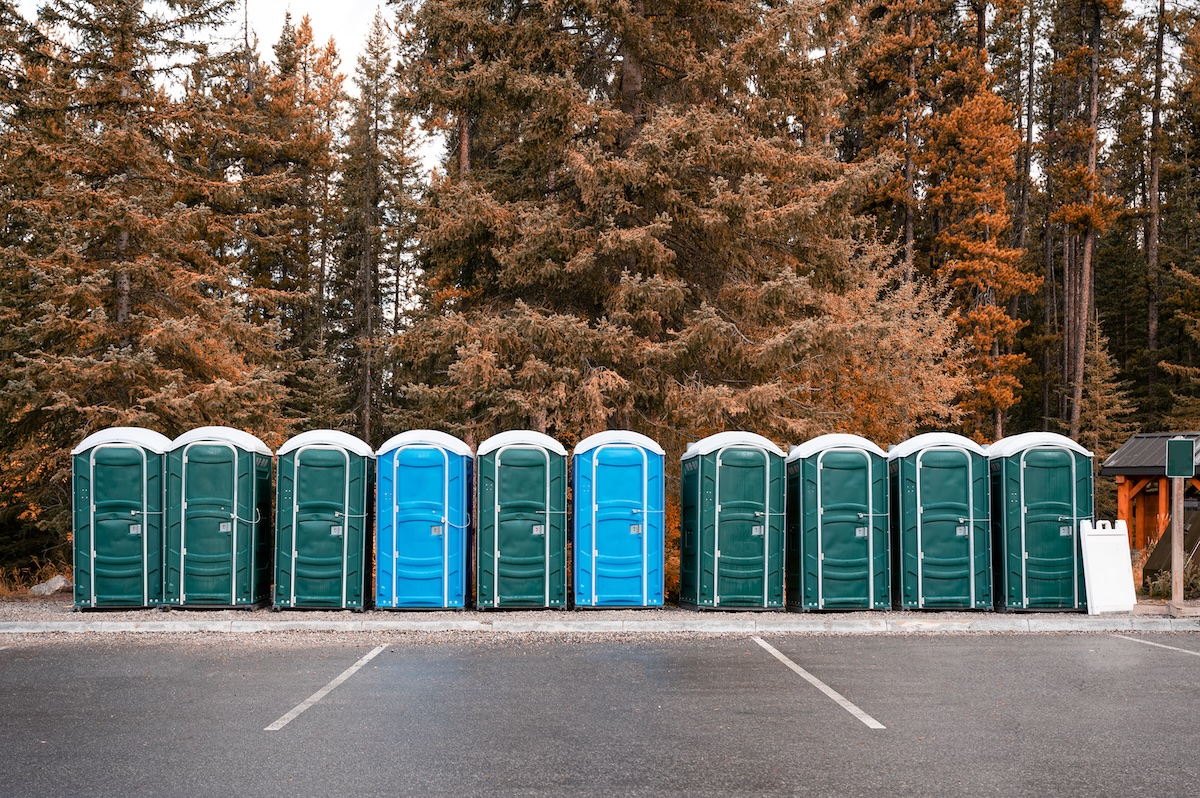
Portable toilets are temporary restroom units designed for locations without access to permanent plumbing. They’re commonly used at outdoor events, construction sites, parks, agricultural operations, disaster response areas, and remote work zones.
They’re a practical solution to a very ordinary human need, and when they’re designed well, placed thoughtfully, and maintained on a sensible schedule, they do their job effectively. Most of the time, that’s exactly the point. They provide a sanitary, reliable option without trenches, pipes, or long-term infrastructure, and they do it in a way that can adapt to changing conditions, crowds, and timelines.
This guide takes a closer look at how portable toilets work beyond the surface-level assumptions most people have. It walks through how sanitation is managed inside a self-contained system, what influences cleanliness and odor control over time, and why planning decisions—like placement, servicing frequency, and supply management—matter more than people realize. Different environments place different demands on these units, and understanding those demands is what keeps them functioning smoothly across job sites, events, and temporary installations of all kinds.
What Portable Restrooms Are and Where They’re Used
Portable restrooms (sometimes called “portable toilets,” “porta potties,” or “port-a-potties”) are self-contained restroom systems built around containment rather than plumbing. Instead of connecting to sewer or septic lines, each unit manages waste internally until it can be removed during scheduled servicing.
They are used anywhere permanent restrooms are impractical or unavailable, including:
- Construction and infrastructure projects
- Outdoor festivals, fairs, and sporting events
- Public parks and recreation areas
- Agricultural and seasonal work sites
- Emergency response and temporary housing zones
- Weddings and private events held outdoors
Their role is straightforward: provide safe, accessible restroom access while maintaining hygiene standards in temporary settings. In rental scenarios, their self-contained design is exactly what makes portable restrooms practical and cost-effective.
Because they don’t require plumbing, excavation, or utility hookups, they can be delivered, placed, and removed with minimal disruption to a site. This keeps setup fast and predictable for projects, events, or temporary needs where permanent infrastructure doesn’t make sense. Portable toilet rental providers handle delivery, placement guidance, routine servicing, and final removal, which shifts maintenance responsibility away from the customer and onto the vendor. For most use cases, renting provides flexibility without long-term commitment, allowing the number of units and service frequency to scale up or down as conditions change, while keeping upfront costs and logistical complexity low.
How Portable Toilets Work
Enclosed Waste-Holding Tanks
At the base of every portable toilet is a sealed waste-holding tank. Waste enters the tank directly through the toilet seat opening and stays there until a service crew pumps it out. There is no connection to the sewer lines, and no hidden drain underneath. Instead, everything is contained in that single, enclosed system.
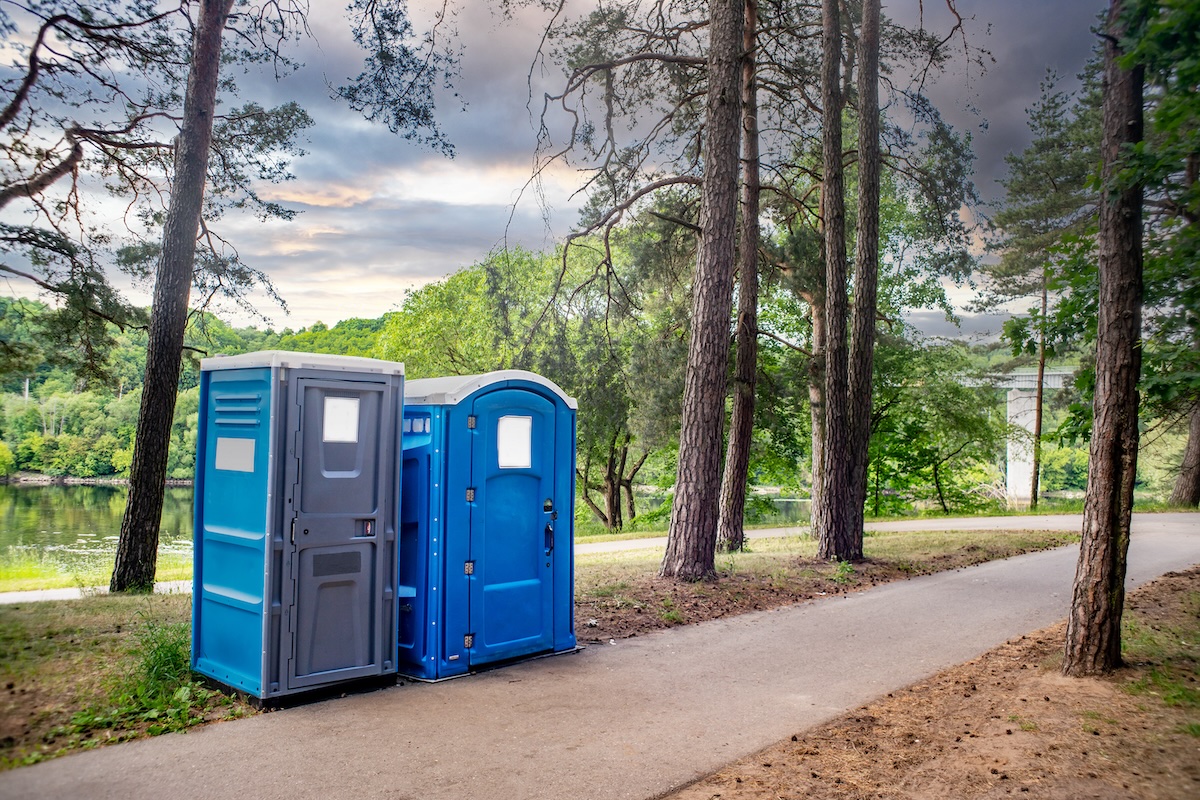
Fewer moving parts means fewer failure points, especially in places where the unit might be relocated, tilted slightly during placement, or exposed to long stretches of sun, wind, and weather.
These tanks are manufactured to prevent leakage, even when the unit is moved repeatedly or sits on uneven ground, and they’re designed to handle wide temperature swings without cracking or deforming. Over their lifespan, a single tank may be pumped, cleaned, refilled with treatment chemicals, and put back into service hundreds of times. That cycle is expected, and the materials and construction reflect it. When everything is working as intended, the tank does its job in the background, containing waste safely until it can be removed and processed during scheduled servicing.
Chemical Treatment Inside the Tank
Before a portable toilet ever gets set in place, the waste-holding tank is charged with a measured amount of deodorizing and disinfecting chemicals. These treatments are there to manage what happens after the first use, not to react to problems later. By slowing microbial activity inside the tank, the chemicals limit how quickly odor-producing processes get going and help keep conditions stable between service visits. They also assist in breaking down waste so it stays more uniform, which makes pumping and cleaning more efficient when the unit is serviced.

You’ll also notice that these chemicals tint the contents of the tank, usually blue or green. That detail tends to get written off as cosmetic, but it serves a couple of practical purposes. For users, it reduces visual discomfort and keeps the interior experience straightforward and predictable. For service crews, the color makes it easier to gauge tank levels and assess how the unit has been performing since the last visit. It’s a small design choice that supports both usability and maintenance, which is often how portable sanitation works best—mostly invisibly, with a lot of small decisions adding up to a system that holds together in real-world conditions.
Ventilation and Interior Components
Most portable toilets include ventilation openings that allow air circulation and reduce odor buildup inside the unit. Interior components typically include:
- A toilet seat and lid
- A urinal surface in standard units
- A toilet paper dispenser
- Vent openings near the roofline
Some units also include integrated hand sanitizer dispensers, mirrors, or lighting panels that improve usability.
Sanitation & Hygiene Considerations
As with any shared restroom, surfaces inside a portable toilet can become contaminated through repeated use. High-touch areas such as door handles, toilet seats, and interior walls are the most common contact points. That said, in practical terms this is rarely a major concern. Modern portable restrooms are designed around the reality of shared use, with non-porous plastic surfaces that don’t absorb moisture or organic material and are easy to wipe down between services.
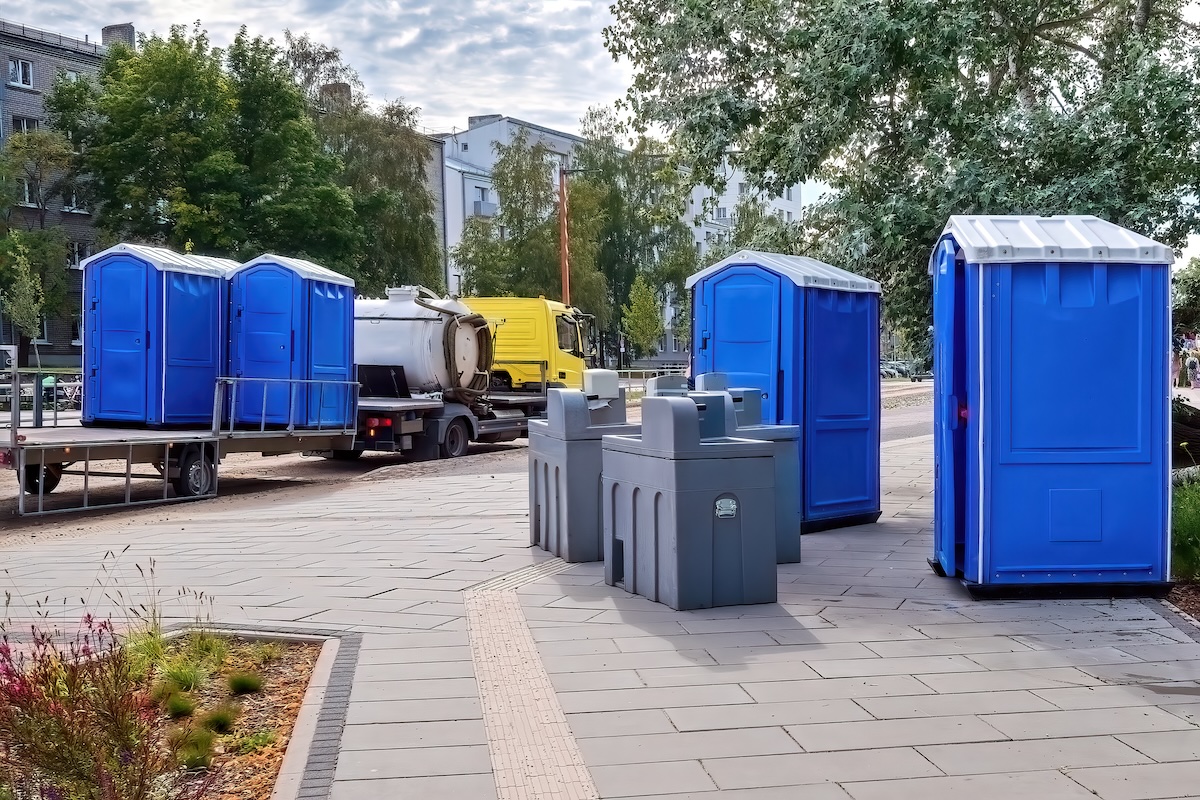
Reputable providers service units on a set schedule, restocking sanitizer, removing waste, and addressing visible residue so contamination doesn’t accumulate over time. For most users, contact is brief and limited, and simple habits like using the built-in hand sanitizer or washing hands afterward effectively break the chain of exposure. In everyday use, portable restrooms present a risk profile similar to other high-traffic public facilities, and when they’re properly maintained they are very sanitary.
How Contamination Can Occur
Without regular cleaning and disinfecting, microorganisms can transfer between surfaces and users. This is why routine servicing and supply restocking are central to sanitation. Any restroom that sees steady traffic will accumulate contact points, and portable restrooms are designed with that expectation in mind.
The reason routine servicing works so well is that it resets the environment on a predictable schedule, keeping conditions within a normal, manageable range. When cleaning, disinfecting, and restocking stay aligned with how often the unit is used, contamination doesn’t have the opportunity to compound. The result is a restroom that feels familiar and functional, even in settings where permanent facilities aren’t an option.
Hand Hygiene

Handwashing and hand-sanitizing station rental can significantly help in reducing the transfer of microorganisms after restroom use. When soap and water are available, they provide the most effective protection. In locations where plumbing isn’t feasible, alcohol-based hand sanitizer stations are widely used and effective.
Placing these stations near the exit of each unit and keeping them stocked encourages consistent use and supports overall site hygiene.
Addressing Odor

Odor is the result of microbial activity during the breakdown of organic material. As microorganisms metabolize waste, gases are released. These gases accumulate more quickly when:
- Waste removal is delayed
- Chemical treatments are depleted
- Usage exceeds the unit’s intended capacity
- High temperatures accelerate biological processes
Odor control works best when servicing schedules match actual usage levels and chemical treatments are replenished consistently.
In many cases, odor is an indicator that the system is being asked to work harder than it was set up for. Portable toilets are designed around predictable use and regular reset points, and when those align, conditions stay stable. Heat, crowd size, and time between service visits all influence how quickly the balance shifts, which is why planning and scheduling matter more than any single product or treatment. When servicing frequency reflects real-world demand and chemical levels are maintained, odor stays controlled in a way that feels routine and expected, even during long days or high-traffic periods.
Deodorizing Products and Their Purpose
Portable toilet deodorizing products are designed to manage odor by controlling microbial growth, not simply masking smells. They are available in several formats:
- Liquid concentrates
- Dissolvable tablets or packets
- Supplemental vapor or fragrance products
The effectiveness of any product depends on proper dosing and regular reapplication. Even high-quality treatments require routine servicing to remain effective.
Environmental Protection and Containment
Preventing Leaks and Spills
Modern portable toilets are engineered to keep waste fully contained until it is removed and processed at approved facilities. Proper placement on level ground and secure positioning reduce the risk of tipping or tank stress.

Leaks or overfilled tanks can release waste into surrounding soil or water, which is why adherence to servicing schedules and capacity guidelines is so important.
In practice, this containment works reliably in the background when the basics are handled with care. Most issues tied to leaks or spills aren’t the result of faulty equipment, but of placement decisions or service timing that didn’t quite match the conditions on site. Level ground, stable positioning, and realistic capacity planning take a lot of pressure off the system, especially in areas with weather shifts or heavy foot traffic. When those factors are accounted for, portable toilets behave like the closed systems they’re designed to be, keeping everything contained and predictable from setup through servicing.
Placement and Site Planning
Units should be placed away from drainage paths, bodies of water, and areas prone to flooding. In wet or environmentally sensitive locations, additional precautions such as elevated placement or anchoring may be required.

Thoughtful placement tends to solve a lot of downstream issues before they ever have a chance to appear. When units are positioned with water flow, terrain, and weather patterns in mind, they’re far less likely to be affected by shifting ground or runoff during heavy rain. In sensitive environments, small adjustments like elevation or anchoring add an extra layer of stability without complicating setup. These choices are usually made during planning, but they play a big role in keeping the surrounding area undisturbed and the sanitation system operating as intended for the duration of use.
Routine Servicing and Maintenance
What Servicing May Include
A standard portable toilet service visit typically includes:
- Pumping out the waste-holding tank
- Cleaning and disinfecting interior surfaces
- Restocking toilet paper and sanitizer
- Adding fresh deodorizing chemicals
Skipping or shortening any of these steps reduces sanitation quality and accelerates odor buildup.
How Often Servicing Is Needed
Service frequency depends on usage volume, duration, and conditions. Examples include:
- Light-use job sites: weekly servicing
- Moderate-use public areas: multiple times per week
- High-use events: daily or multiple services per day
There is no universal schedule that works everywhere. Servicing plans should be based on realistic estimates of use rather than minimum requirements.
Supply Management and User Experience
Toilet paper, sanitizer, and functional dispensers are basic expectations. When supplies run out, users adapt in ways that increase contamination and wear on the unit.
Consistent restocking improves cleanliness and reduces strain on both users and service schedules.
Design features that support sanitation include:
- Smooth interior surfaces that clean easily
- Adequate ventilation openings
- Stable flooring and secure door latches
- Interior lighting or translucent roofs
These details reduce maintenance time and help units stay usable between service visits.
Accessibility and Specialized Units
ADA-Compliant Portable Toilets
Accessible units are designed to accommodate mobility devices and provide additional interior space. They include wider doors, handrails, and ground-level entry.
These units require more placement space and careful positioning but are essential for inclusive access and regulatory compliance.
Handwashing Stations and Multi-Unit Setups
In some settings, standalone handwashing stations with running water are placed alongside portable toilets. These stations typically include:
- Foot- or hand-operated faucets
- Soap dispensers
- Paper towels or air drying options
They are common at food-focused events, long-duration sites, and high-traffic locations.
Planning the Right Number of Units
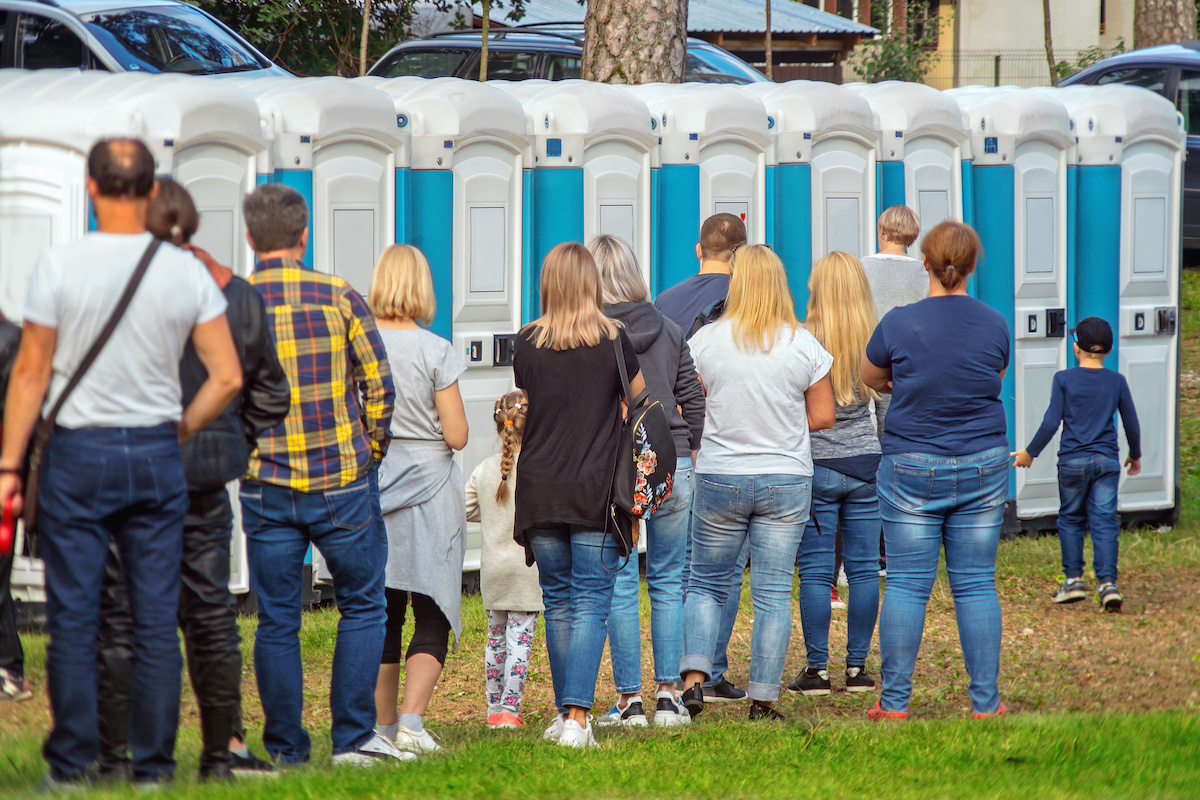
Factors Affecting Demand
The number of portable toilets needed depends on several variables:
- Number of users
- Length of time the units will be in use
- Food and beverage availability
- Alcohol consumption
- Demographics and activity type
Higher unit counts reduce usage per toilet, slow waste accumulation, and extend cleanliness between services.
Why Overcrowding Creates Problems
When too few units are provided, tanks fill faster, surfaces degrade more quickly, and servicing becomes reactive instead of scheduled. Providing adequate capacity stabilizes the entire system.
Overcrowding tends to be a planning issue rather than an operational one, and it’s usually easiest to address before the units ever arrive on site. When enough toilets are available for the number of users and the length of time they’ll be in service, everything moves at a steadier pace—waste accumulation slows, interiors stay in better condition between cleanings, and service visits can stay on a predictable schedule. Adequate capacity gives the system breathing room, which makes the experience more consistent for users and simpler to manage behind the scenes.
When unit counts are matched realistically to crowd size and usage patterns, portable restrooms tend to fade “into the background” in the best possible way. Lines stay short, interiors remain usable throughout the day, and servicing crews can operate on routine intervals instead of responding to avoidable issues. From a rental perspective, a little extra capacity almost always pays off in smoother operations, fewer complaints, and a more comfortable experience overall. When the basics are sized correctly from the start, portable restrooms do what they’re meant to do—support the event or project quietly, reliably, and without becoming a distraction.
When Portable Restrooms Are Managed Well
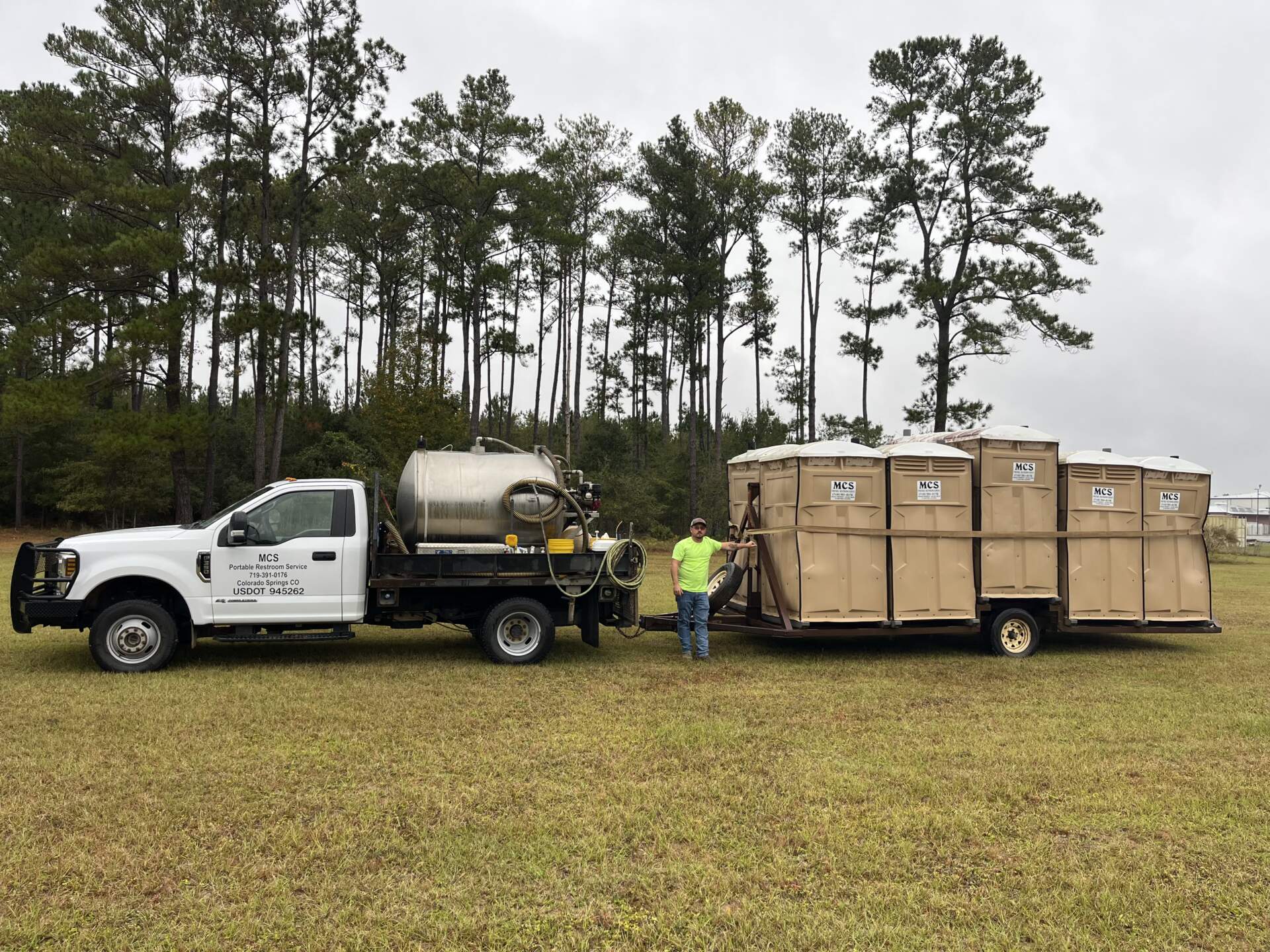
When portable toilets are properly selected, placed, serviced, and supplied, they function reliably. They meet sanitation needs, protect the surrounding environment, and support public health without drawing attention.
Their success is measured by how little people think about them.
Summary
What Keeps Portable Restrooms Sanitary?
Effective portable toilet management comes down to a few consistent principles:
- Use sealed, well-designed units
- Match servicing frequency to real usage
- Maintain adequate chemical treatment
- Provide hand hygiene options
- Plan placement and capacity carefully
When those elements are in place, portable toilets do their job efficiently and predictably in locations where permanent restrooms aren’t an option. When planning, placement, capacity, and servicing are aligned with real-world use, they meet a basic need in places where permanent infrastructure isn’t practical.
When everything is set up correctly, portable toilets blend into the flow of the day (or night)—doing exactly what they’re supposed to do and allowing people to focus on the work, the event, or the experience rather than the restroom itself.