
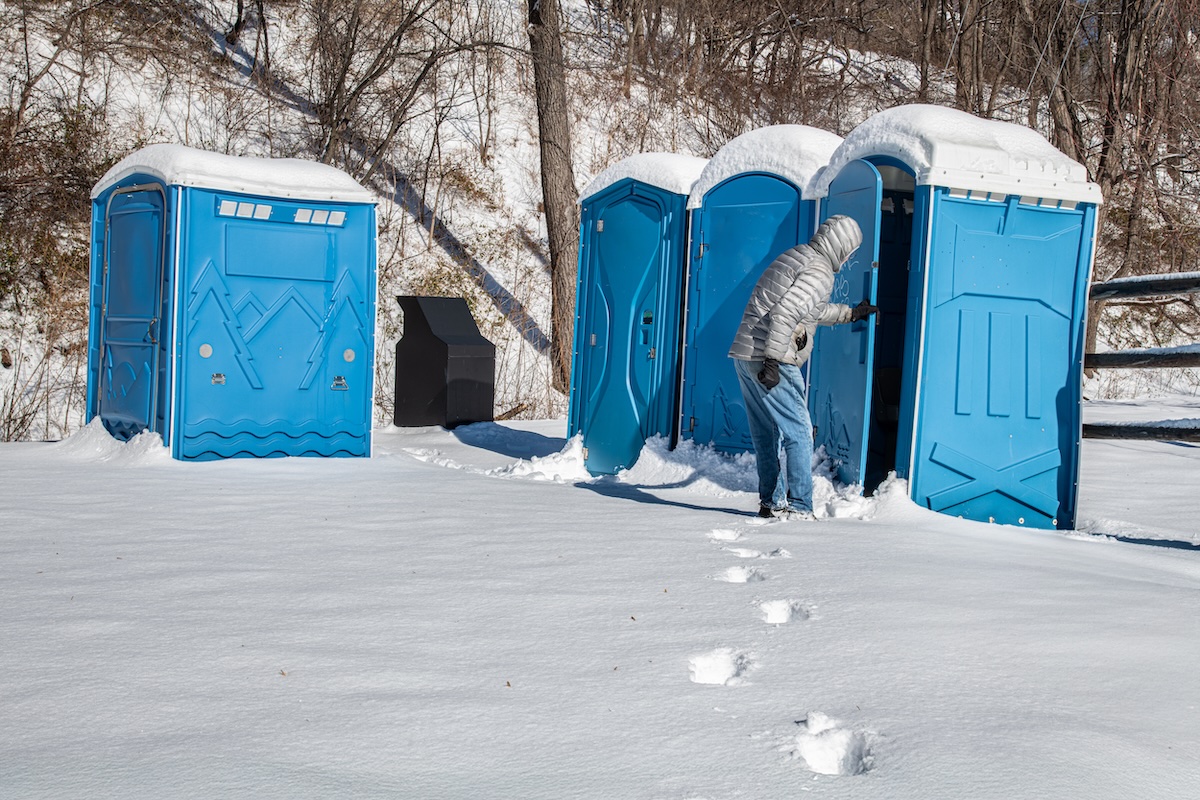
Winter in Colorado Springs means crisp mornings and bright blue skies, often the very day after a snowstorm, with Pikes Peak dusted white over the city. It’s sledding hills and ice skating and holiday lights, plus those weekend drives up into the mountains. And plenty of work and play keeps right on going outdoors through all of it. And wherever people gather or work outside, the restrooms need to keep working once the temperature dips below freezing.
Porta potties can freeze. The holding tank under the seat is mostly water, so when temperatures stay below 32°F long enough, the liquid inside may turn to slush or ice. That puts winter planning on the list for anyone arranging porta potty rental in Colorado Springs between October and May.
Freezing nights are common in Colorado Springs from early fall well into spring, and jobsites, holiday markets and outdoor events keep running through them. Winter treatments for the tank, careful placement and a service schedule built around cold weather can help keep a porta potty usable through the season.

Think about the construction crews pouring coffee from a thermos at 6 a.m., or the road workers patching potholes the morning after a winter storm, or a few volunteers handing out hot cocoa at a neighborhood holiday event. Sooner or later, everyone there is going to need to use the restroom. And when that time comes, having clean, working portable restroom facilities a short walk away makes a long, cold day a little easier on everybody.
Do Porta Potties Freeze in the Winter?
The part of a port-a-potty that can freeze in the winter is the liquid in its holding tank. A freshly serviced tank typically starts with a few gallons of water mixed with deodorizer, and use adds to that volume from there. Liquid left in the urinal can freeze as well. During a short cold spell, a thin layer of ice may form on the surface first, and a longer stretch below freezing can turn more of the tank to slush or solid ice.

Several conditions decide whether that happens: how cold it gets, how many hours or days it stays below freezing, how much sun and wind the unit gets, and whether the tank has been treated for winter. A frozen tank is hard to pump and clean until it thaws, so winter service typically aims to keep the liquid from freezing in the first place.
Wind chill measures how cold moving air feels on skin. A porta potty responds to wind differently: moving air carries heat away from the unit faster, so the tank cools to the air temperature sooner and keeps less of the warmth it picked up from the sun. The air temperature sets how cold the tank can get, and wind sets how quickly it gets there.
Does Porta Potty Water Freeze?
The blue liquid in porta potties is mostly water mixed with a deodorizer and dye. On its own, that mix typically freezes at close to the same temperature as plain water, around 32°F. Liquid waste in the tank is mostly water too, so it behaves much the same way.
Winter treatments change that. Rental companies typically add a product that lowers the freezing point of the tank’s contents, such as a salt brine or an antifreeze made for portable sanitation, so the liquid can stay fluid below 32°F. How far below depends on the product, the amount used and how much the tank has been diluted by use, which is why a treated tank may still freeze during a long, hard cold snap.
Freezing Weather in Colorado Springs
Colorado Springs has a long freeze season. National Weather Service records for the city put the average first fall freeze in early October and the average last spring freeze on May 8, a span of roughly seven months.1 Freezes have arrived both as early as September, and as late as June.
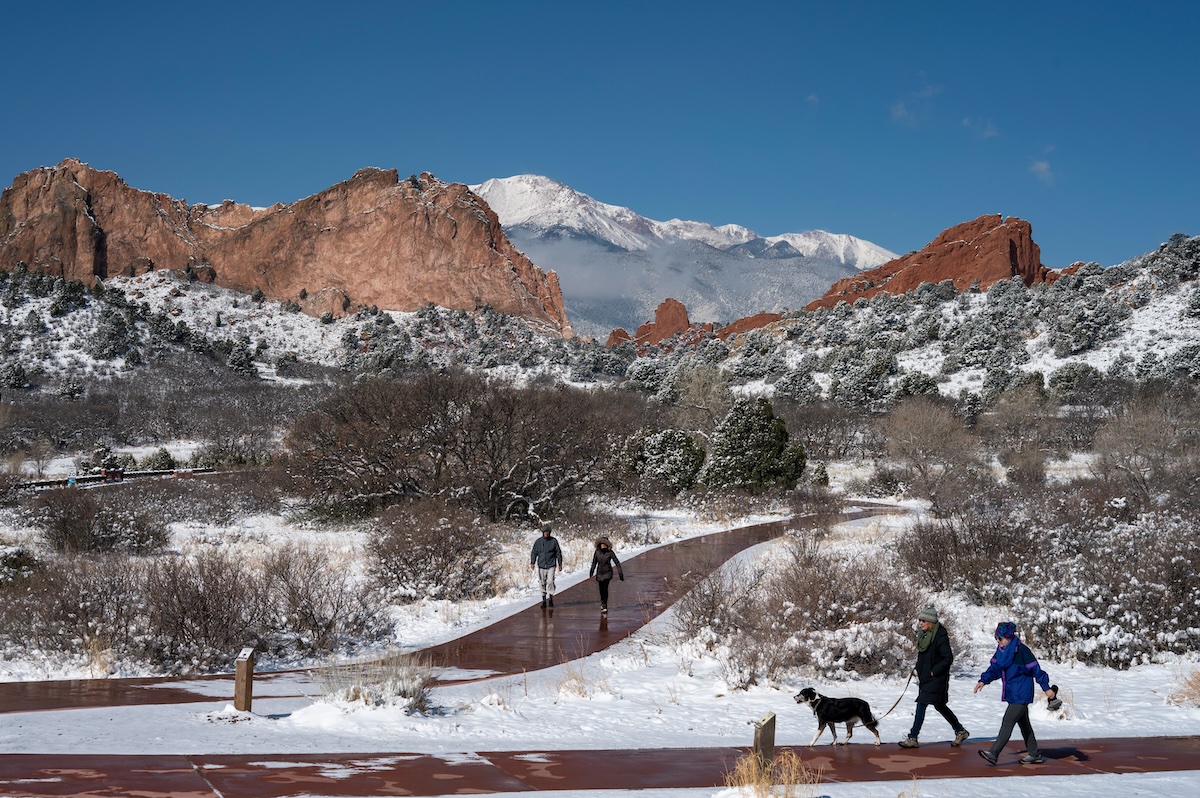
Fortunately, most of those freezing nights end with an afternoon thaw. In both 2021 and 2025, the Colorado Springs airport recorded more than 120 nights at or below 32°F but fewer than two dozen days that stayed at or below freezing all day.2,3 A porta potty often gets some daytime warming as a result, while a cold snap lasting several days takes that break away.
| Colorado Springs airport | 2021 | 2025 |
|---|---|---|
| Nights at or below 32°F | 142 | 125 |
| Days that stayed at or below 32°F all day | 14 | 22 |
| Nights at or below 0°F | 5 | 6 |
Figures from National Weather Service annual climate summaries for the Colorado Springs airport.2,3
Recent winters have also brought sharp cold snaps. From January 17 to 21, 2025, Arctic air moved over Colorado, and the temperature in Colorado Springs dropped to -14°F.3 On February 14, 2021, the high was -1°F, one of only 18 days on record when the temperature in Colorado Springs never rose above zero.2 Daytime melt that refreezes overnight can also leave ice on the step and the path to a unit.
Wind in Colorado Springs
Wind is the other local factor. The Colorado Springs airport recorded a 92 mph gust on December 15, 2021, and a 64 mph gust on March 4, 2025.2,3 Strong wind speeds up heat loss from a unit, and on open ground it can push or tip a porta potty, especially right after a service visit, when the tank is at its lightest.
Rental companies may stake or anchor units on exposed sites, and setting a unit on the sheltered side of a building, trailer or storage container can help with both wind and cold. Sites at higher elevation, such as around Monument or Woodland Park, may also run colder than the airport readings.
How Do Porta Potties Not Freeze in Winter?
Porta potties typically stay usable in winter because the holding tank is treated to resist freezing. Once overnight temperatures start dropping below freezing, rental companies typically add a freeze-point depressant to the tank at each service visit. Options include salt brine, chloride-based products and non-toxic antifreeze formulas made for portable sanitation, and some providers use their own blends.
Pumping removes the treatment along with the waste, and use dilutes whatever is left between visits, so the treatment is typically renewed every time the unit is serviced. That’s one reason how often a porta potty rental is serviced may change once cold weather sets in, with some sites moving to more frequent visits during long cold stretches.
Placement helps as well. A unit in afternoon sun and out of the wind tends to hold heat longer than one in a shaded, exposed corner of a lot. Some providers also offer heaters built for portable restrooms, and some long-term sites switch to heated bathroom trailers for the coldest months.
How to Winterize a Porta Potty
Properties that own their units, such as ranches, farms and camps, may handle winterizing themselves. The steps below reflect common practice, and the treatment’s label and the unit manufacturer’s guidance come first wherever they differ.
Use a treatment made for portable toilets
Choose a winter additive labeled for portable toilet holding tanks and add it at the rate on the label, typically after each pump-out.
Keep the tank pumped on schedule
As the tank fills, the treatment gets diluted, so regular pumping helps it keep working through a cold stretch.
Place the unit for sun and shelter
Southern exposure and a windbreak on the windward side may help the unit hold more of the day’s warmth.
Keep snow and ice clear
Clear drifts away from the door and base of the unit, and keep the step and path free of ice.
Automotive antifreeze and windshield washer fluid aren’t made for holding tanks, and both can be toxic, so products labeled for portable toilets are the safer choice. Heaters call for similar care. Some models are designed for use in portable restrooms, while household space heaters can be a fire risk in a small plastic enclosure.
On a rented unit, winterizing is typically part of the rental company’s service. Checking with the provider before adding chemicals or a heater helps avoid damage to the unit or a conflict with the treatment it already uses.
How to Keep a Porta Potty From Freezing
Placement and site care can help a treated unit get through a cold stretch. On jobsites and event grounds around Colorado Springs, these steps typically help:
- Sun. A spot with southern exposure may pick up enough afternoon sun to warm the unit and its tank.
- Shelter. A building, trailer, container or fence on the windward side can cut heat loss and lower the chance of a tip-over.
- Distance from plow piles. Units placed where plows push snow, or where drifts collect, may end up buried or blocked in, which makes them harder to use and to service.
- A clear path. A shoveled, level path to the door and to the side of the unit where it’s serviced keeps it reachable after a storm. Sand or ice melt on the step helps with daytime melt that refreezes overnight.
- Closed doors. A door propped open lets heat out and snow in.
- Advance notice. Telling the rental company when a site will close for the holidays, when access will change, or when a big storm is on the way gives them time to adjust the service schedule.
If slush or ice shows up in the tank, a call to the rental company is typically the first step. Depending on the provider and the forecast, they may add more treatment, schedule an extra visit or swap the unit.
Can Porta Potties Be Used in Winter?
Yes. Porta potties are used through the winter on construction sites, at seasonal businesses and at outdoor events across Colorado. The units are typically made from polyethylene built for outdoor weather, so the differences in winter center on tank treatment, service timing and comfort for the people using them.

Winter also affects comfort for the people using a unit. A plastic seat at 15°F is cold, and early sunsets mean units may get used in the dark. Some winter setups may even add a heater specifically designed for portable restrooms, place units near site lighting, or move to a restroom trailer for long events and large crews.
Porta Potties on Construction Sites in Winter
Construction across El Paso County often continues through the winter, and so do jobsite sanitation rules. OSHA’s construction standard, 29 CFR 1926.51, requires toilets at construction jobsites and sets the minimum number based on crew size.4 The standard doesn’t set separate rules for winter, so the same porta potty requirements for construction sites apply in January just as they do in July.
Frozen ground, snow and mud can make placement and access harder in winter. Units set close to the work area, on level ground and along a cleared path typically stay easier to use and to service through the season.
Porta Potties for Winter Events
Holiday markets, Christmas tree lots, parades, outdoor rinks and winter races all bring people outdoors in the cold. Event restrooms in winter may need a few extra considerations: lighting for late-afternoon and evening use, a cleared and sanded path, and an accessible unit on level ground with a snow-free approach.
Events on public property may come with their own restroom requirements, so organizers typically check with the venue or the City of Colorado Springs before booking units. Hand sanitizer inside each unit can also help when outdoor sinks are limited in freezing weather.
Hand Wash Stations in Freezing Weather
Portable hand wash stations carry their own fresh water tank and typically use a foot pump to move water to the basin. In sustained cold, that fresh water, the pump and the lines between them can freeze, even when the toilets nearby are treated and working.
Common winter approaches include placing sinks in a sunny, sheltered spot, servicing them more often and adding hand sanitizer dispensers inside the restrooms. Some sites use heated hand wash units or move hand washing into a heated trailer or building where one is available. The options vary by provider and by site.
On construction sites where workers apply paints, coatings, herbicides or insecticides, or handle other contaminants that may be harmful, OSHA requires washing facilities that let workers remove those substances.4 Because the standard calls for facilities that can remove those substances, those sites may need a working wash station through the winter.
Restroom Trailers in Cold Weather
Restroom trailers often include heat, lighting, running water and flushing toilets, which can make them a good fit for long winter events and large crews. They typically need a power source, and in freezing weather the trailer’s heat also helps protect its water lines and tanks.
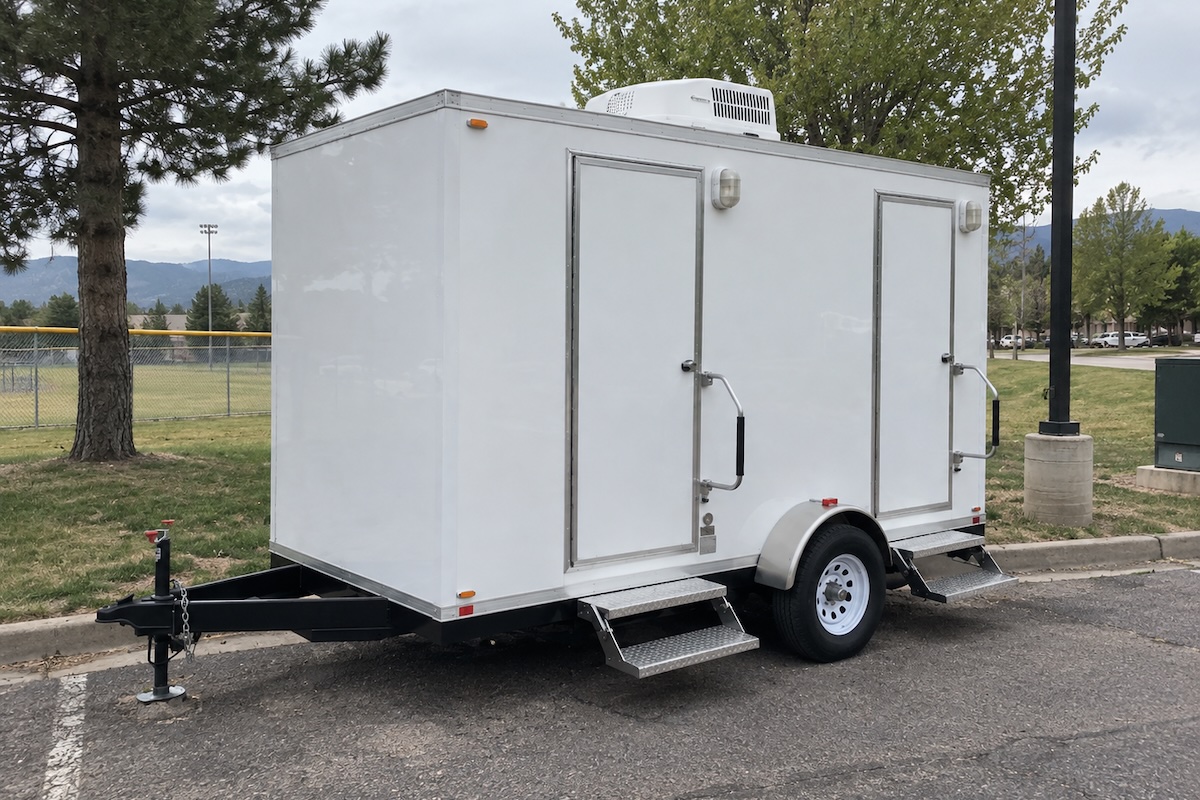
If a trailer loses power on a cold night, its plumbing may freeze, so providers may ask about the power supply, backup options and whether the site can be reached after a storm. Trailers also need more room and a level pad. On tight jobsites, standard units may fit where a trailer won’t, which is one of the trade-offs between standard portable toilets and restroom trailers.
Does Winter Change the Cost of a Porta Potty Rental?
Winter can add to the cost of a rental, and how much varies by provider, site and rental length. Winter-related charges, where they apply, typically reflect the extra treatment and service a unit needs in the cold. Cost factors in winter can include:
- A winterization fee or seasonal rate, which some providers charge separately and others include in their pricing
- More frequent service visits during cold stretches
- Heaters, heated units or restroom trailers
- Site access, including snow removal and distance from a plowed road
- Rental length, since long-term jobsite rentals are often priced differently than one-day events
Any winter charges sit on top of the usual factors behind porta potty rental cost in Colorado Springs, such as unit type, the number of units and how long they stay on site. Asking how each quote handles winter treatment and service frequency can make quotes easier to compare.
Frequently Asked Questions About Porta Potties in Winter
Q: At what temperature does a porta potty freeze?
A: An untreated tank behaves much like water and may start to freeze around 32°F. A treated tank can stay liquid at lower temperatures, depending on the product, the amount used and how diluted the tank has become since its last service. Time below freezing counts too: one cold night may only form surface ice, while several days below freezing can freeze much more of the tank.
Q: What happens if a porta potty freezes?
A: Ice in the tank makes pumping and cleaning difficult until it thaws. Depending on how much has frozen and what the forecast looks like, the rental company may add treatment, wait for warmer weather or swap the unit. A quick call when ice first appears typically gives them the most options.
Q: Can you put a heater in a porta potty?
A: Heaters designed for portable restrooms are available, and on a rental, providers typically want to approve one before it goes in. Household space heaters can be a fire risk in a small plastic enclosure.
Q: Do outdoor toilets have less of a smell in winter?
A: Often, yes. Cold slows the bacterial activity that produces the odor, so outdoor toilets may smell less in January than in July.
Q: How often should a porta potty be serviced in winter?
A: Jobsite rentals are typically serviced weekly, with more visits for larger crews or heavier use. Each winter visit also renews the tank treatment, so some providers add visits during long cold stretches.
Q: Is a porta potty required on a construction site in winter?
A: Yes. OSHA’s construction sanitation standard requires toilets at jobsites based on crew size and has no separate rules for winter. The standard makes an exception for mobile crews that have transportation readily available to nearby toilet facilities.
Q: Will snow delay porta potty service?
A: Heavy snow may push service back until roads and the site are cleared. A plowed path to each unit and a heads-up to the rental company before a storm can help keep any delays short.
Winter rentals in Colorado are easier to plan before the first hard freeze, while there’s still time to adjust placement, treatment and service. In the Colorado Springs area, call (719) 391-0176 or click here to contact MCS Portable Restrooms.
References
1. National Weather Service Pueblo. Climate Freeze Data. Source
2. National Weather Service Pueblo. Annual Summary 2021, Colorado Springs. Source
3. National Weather Service Pueblo. Annual Summary 2025, Colorado Springs. Source
4. Occupational Safety and Health Administration. 29 CFR 1926.51, Sanitation. Source
Weather figures are from the Colorado Springs airport station. Treatment methods, service schedules and winter options vary by provider.