
Portable restrooms are one of those things that tends to sit on the planning checklist until something forces them into focus. It might be the first busy hour of an event, a long workday on a job site, or a line that starts forming where no one expected one. When restrooms are sized correctly and matched to the situation, most people never think twice about them. When they’re not, the impact shows up fast.
If you’re coordinating a construction site, organizing an outdoor event, or setting up a temporary location, restroom selection plays a larger role than it often gets credit for. The type of facilities you choose influences comfort, how smoothly people move through the space, and how manageable the site feels over the course of the day. It also affects things like servicing schedules, placement logistics, and how the restrooms fit into the overall layout.
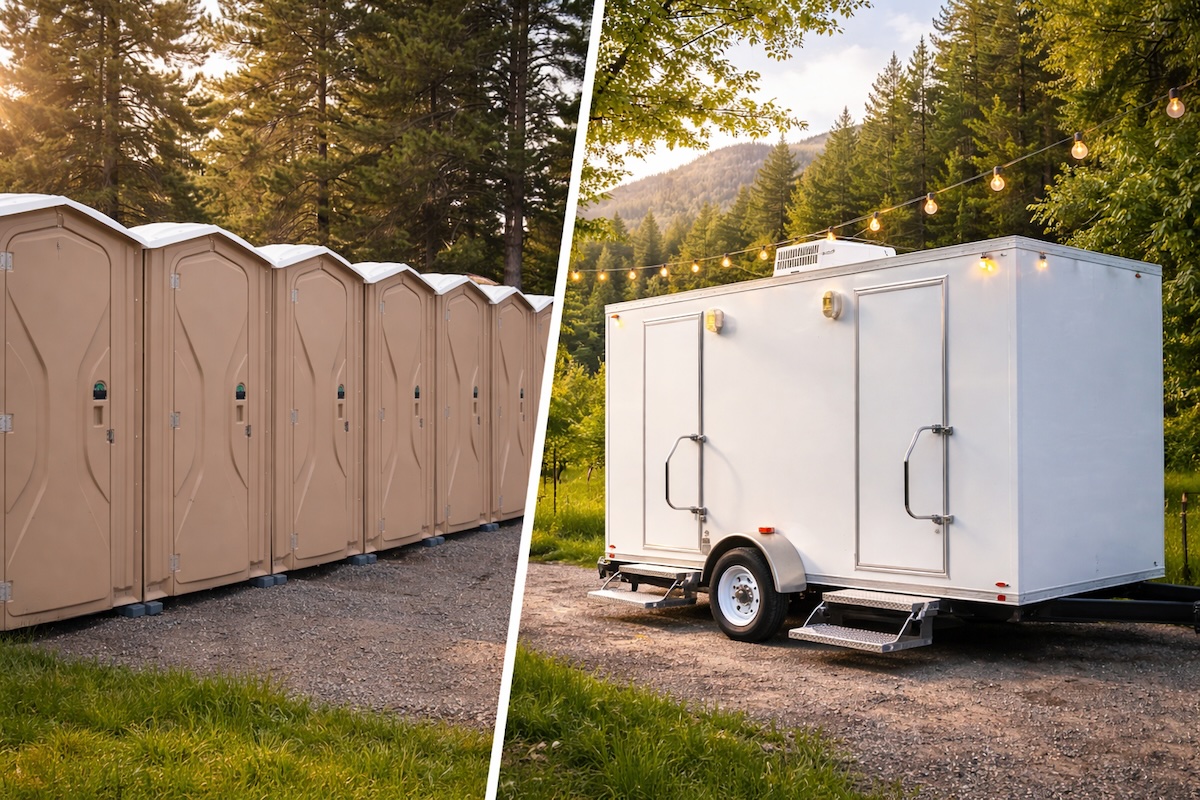
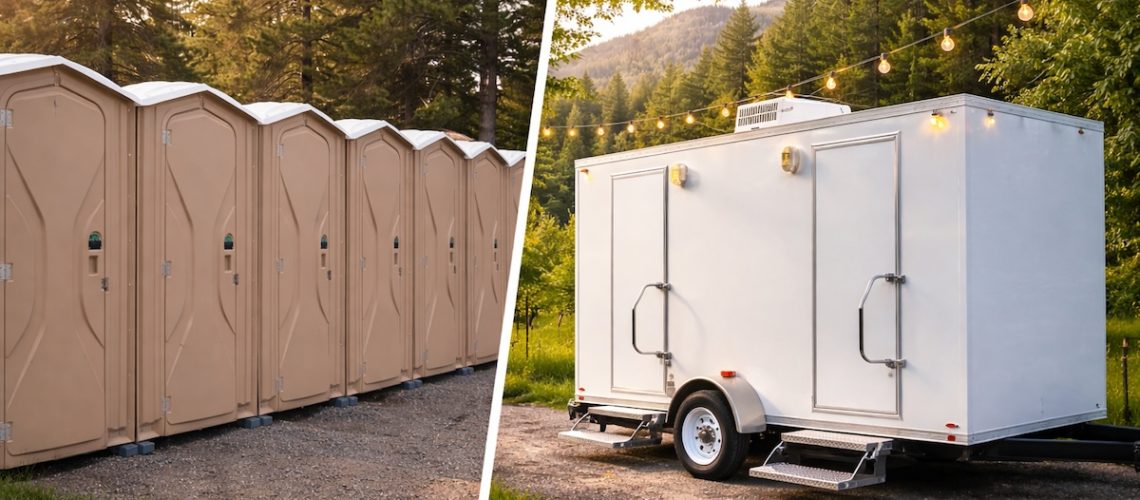
The majority of portable restroom rental falls into three core categories: standard portable restrooms, luxury portable restroom trailers, and handwashing stations. Each is designed to solve a slightly different problem, and none of them exist as a one-size-fits-all solution. The right setup depends on practical details, such as how long people will be on site, how many users you’re planning for, and what kind of experience the environment calls for.
Visibility and context matter as well. A remote work zone has different needs than a wedding venue. A multi-day event brings different considerations than a short-term setup. Understanding how these restroom options differ helps you make decisions that feel intentional, keep things running smoothly, and avoid last-minute adjustments once people are already on site.
Standard Portable Restrooms
Standard portable restrooms are the most familiar option, and that familiarity comes from how consistently they perform in a wide range of settings. They’re designed to handle everyday demand efficiently, without adding unnecessary complexity to planning or logistics. When the goal is to provide reliable access across a site or event, these type of units are often the starting point.
Each unit is fully self-contained, which makes placement straightforward. They’re built from durable materials that hold up well to outdoor conditions and frequent use, and they can be set up on just about any stable surface. Inside, you’ll typically find a toilet, a urinal, and a holding tank, with many models also offering a hand sanitizer dispenser or a basic foot-pump sink. There’s no need for plumbing or electrical connections, which keeps setup fast and flexible.

That simplicity also makes ongoing service easier to manage. Standard portable restrooms are designed for regular, predictable maintenance, allowing providers to keep them refreshed on a consistent schedule. This is especially important for longer projects or high-traffic environments, where reliability matters more than added features.
Where standard units really stand out is in situations that call for scale and adaptability. Construction sites, large outdoor gatherings, emergency response areas, and multi-day events all rely on them because they can be distributed across a space to reduce walking distance and manage traffic flow.
When coverage, accessibility, and efficiency are the priorities, standard portable restrooms offer a dependable solution that keeps everything moving smoothly.
From a planning perspective, standard portable restrooms also give organizers a high degree of control. Because they’re modular and uniform, it’s easier to calculate quantities, adjust placement, and respond to changing conditions. If attendance runs higher than expected or a project footprint expands, additional units can be added without disrupting the overall layout. That flexibility is a big reason they remain the default choice for environments where variables shift over time.
Another advantage is how well these units integrate into safety and compliance planning. On job sites, they help meet basic workplace requirements without interfering with equipment movement or work zones. At public events, they can be positioned to support crowd flow, keeping lines away from entrances, food service areas, or high-traffic walkways. Their predictable footprint makes it easier to plan spacing, signage, and access routes, which contributes to a smoother experience overall.
Standard portable restrooms can also offer the most straightforward path to long-term cost control. Their durability and standardized servicing schedules make expenses easier to forecast, especially for multi-day events or extended projects. Rather than paying for features that won’t be fully utilized, planners can focus resources on quantity, placement, and maintenance frequency. That balance is often what keeps a site functioning comfortably from start to finish, even as conditions change.
Trailer-Style Portable Restrooms (AKA Comfort Stations or Luxury Portable Restrooms)
Portable restroom trailer rental is designed for environments where restrooms play a visible role in the overall experience. In these settings, the goal isn’t simply to provide access, but to offer facilities that feel aligned with the tone and expectations of the event or venue.
These trailers are built to mirror the layout and comfort of permanent indoor restrooms. Inside, guests will find flushing toilets, running water sinks, mirrors, and proper lighting, along with climate control that keeps the space comfortable regardless of the weather outside. The finishes and materials are chosen with both durability and appearance in mind, creating an environment that feels considered rather than temporary, even during extended use.
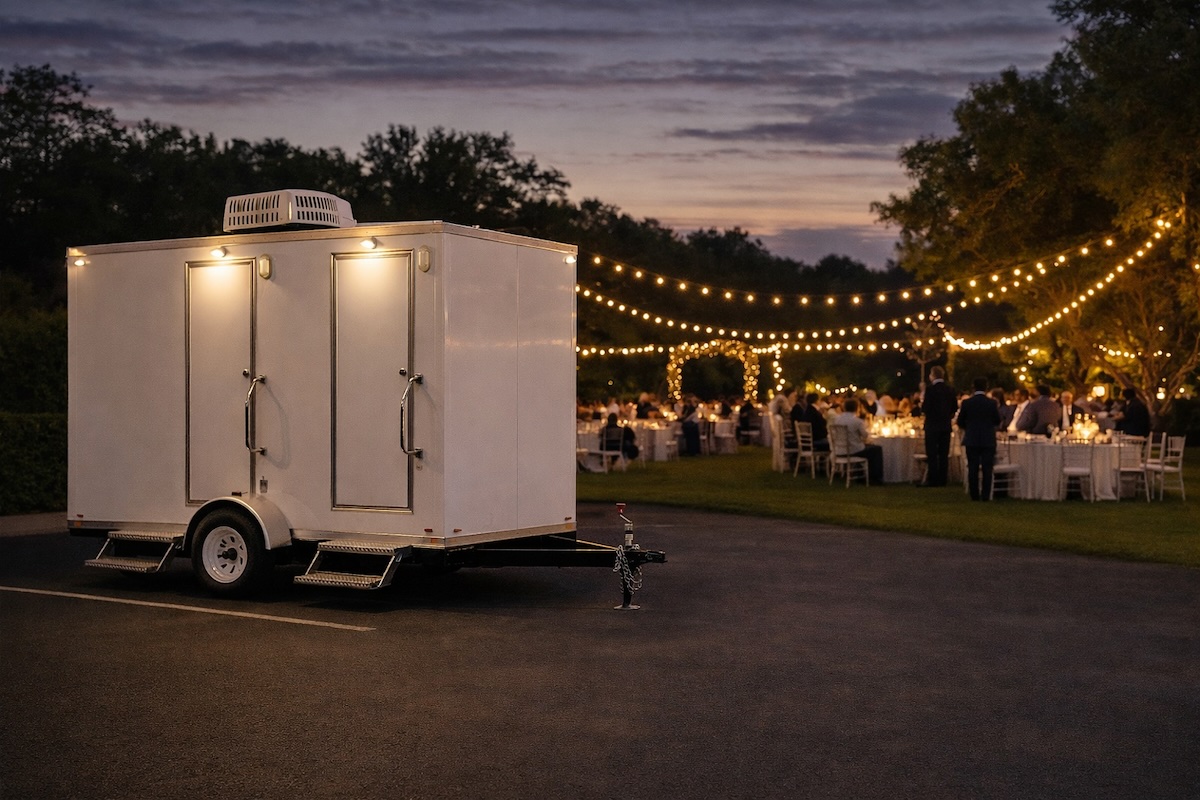
Luxury restroom trailers are a common choice for weddings, corporate gatherings, private functions, and designated VIP areas, where guests may be on site for several hours at a time. In these situations, restroom access becomes part of the overall flow and presentation of the event. The right facilities help maintain consistency across the experience, from arrival to departure.
From a planning standpoint, these trailers offer a balance between comfort and practicality. They’re designed to handle steady traffic while remaining easy to service and manage behind the scenes. For events where details matter and expectations are higher, luxury portable restroom trailers provide a solution that supports both guest comfort and operational efficiency.
One of the reasons trailer-style portable restrooms are often referred to as comfort stations is because the layout and features feel familiar, so people don’t have to adjust expectations or change their behavior the way they sometimes might with more basic outdoor toilet facilities. (Especially at longer events.)
These trailers also have some big advantages when it comes to managing peak usage times. With multiple stalls, defined entry and exit points, and interior layouts designed for steady flow, they can handle surges without creating long lines or congestion nearby. This is particularly useful during scheduled transitions, such as before ceremonies, between sessions, or during breaks… when many people tend to move all at once.
From a logistical standpoint, trailer-style restrooms provide planners with more control over presentation and placement. They’re often positioned strategically near main gathering areas, yet oriented to maintain privacy and visual consistency with the surrounding space. Power and water requirements are typically planned in advance, which allows the rest of the site layout to remain organized and intentional. For events where appearance, comfort, and guest perception carry weight, this level of coordination helps everything feel cohesive from start to finish.
Handwashing Stations
Portable handwash stations / outdoor sinks can help support outdoor restroom facilities. In many setups, they’re the difference between meeting basic requirements and creating a healthier, better-managed environment.
These stations typically include multiple sinks with foot pumps or touch-free dispensing, along with soap and paper towel access. They’re designed for throughput, allowing multiple people to wash their hands quickly without bottlenecks. Some units also include sanitizer dispensers as an added option.

Handwashing stations are especially important for food service areas, high-traffic events, and work environments where cleanliness is part of daily operations. Even when restrooms include basic sanitation features, dedicated handwashing stations reduce congestion and encourage better hygiene simply by being visible and easy to use.
Handwashing stations can do their best work when they’re placed where people already pause. Near food service areas, close to entrances and exits, or along natural walking paths, they give people an easy opportunity to wash up without having to hunt for a restroom. In the context of public sanitation (especially with outdoor toilet facilities) the fact is that when handwashing stations are visible and washing hands looks simple-to-do, people are much more likely to do it.
They’re also helpful in keeping things moving during busy moments. At events or work sites where many people are circulating at once, separating handwashing from restroom use helps prevent backups. Instead of everyone funneling into the same space, traffic spreads out more naturally. That can make a noticeable difference during peak periods, even if everything else is planned well.
From a practical standpoint, hand-wash stations are one of the simplest ways to add flexibility to a setup. They’re easy to reposition if layouts change, easy to service, and easy to scale up if attendance grows. And whether they’re supporting portable restrooms or standing alone in specific areas, they add a layer of organization and comfort that people appreciate even if they never consciously think about why.
Matching Portable Restrooms to a Specific Event or Job Site
| Event or Site Type | Common Restroom Approach | Why This Setup Typically Works |
| Construction/Military | Typically standard portable restrooms, trailer-style restrooms are sometimes used as well | Easy to distribute across work areas, straightforward to service, and well suited for daily use over long periods |
| Outdoor festivals or fairs | Standard portable restrooms with handwashing stations | Supports high volume and steady turnover while keeping lines and traffic spread out |
| Weddings, galas, private celebrations | Luxury portable restroom trailers | Aligns with guest expectations for comfort and presentation during longer events |
| Corporate or brand events | Luxury portable restroom trailers | Maintains a polished feel and integrates smoothly with formal or guest-facing environments |
| Sporting events or tournaments | Standard portable restrooms, often in clusters | Allows placement near entrances, fields, or spectator areas to reduce walking distance |
| Emergency response or disaster relief | Standard portable restrooms with handwashing stations | Fast deployment, flexible placement, and predictable servicing in changing conditions |
| Food service areas or catered events | Handwashing stations alongside restrooms | Improves hygiene access without forcing additional restroom traffic |
| Multi-day outdoor events | Standard portable restrooms or trailers, depending on audience | Choice typically depends on length of stay and how much comfort is expected over time |
How Many Portable Restrooms Do You Need?
Some of the most common questions people have about planning portable restrooms revolve around how many units are needed for a given event or site (such as for a wedding, on a construction site, and so on.). The answer depends on a few core factors, including the number of people on site, how long they’ll be there, and whether alcohol or food service is involved.
Short-duration events with steady turnover typically require fewer units than longer gatherings where people remain on site for several hours. Job sites and multi-day projects also introduce different usage patterns, since facilities are used repeatedly throughout the day rather than in waves.
Rather than relying on a single formula a lot of planners will work with rough guidelines and then adjust based on peak usage times. Planning for the busiest moments like breaks, intermissions, shift changes, and so on can help prevent long bathroom lines.
Final Thoughts
Again, most people don’t spend much time thinking about restrooms until they’re already on site and things are in motion. By then, the details either feel obvious or they feel awkward, and there’s rarely much in between. When planning is done well, the facilities tend to land in the first category. They’re where you expect them to be, they fit the tone of the space, and they work the way you assumed they would. That usually comes from small, practical decisions made ahead of time—how long people will be around, where foot traffic naturally gathers, and what the setting calls for overall.
When portable restrooms are planned thoughtfully, they “disappear” in the best possible way. People find them where they expect them to be, use them comfortably, and move on.
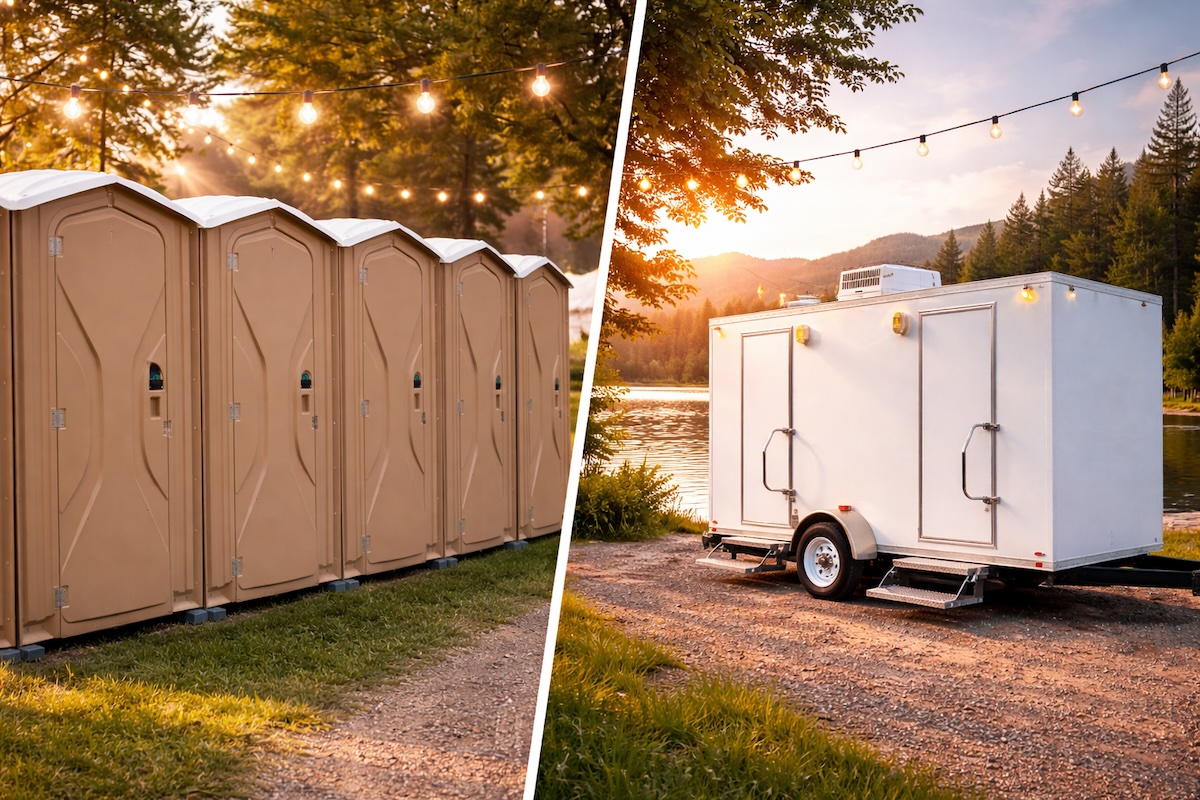
Some environments benefit from simple, widely distributed access that keeps things moving efficiently. Others call for facilities that feel more polished because guests will be spending more time on site and engaging closely with the space. The right choice comes from understanding how long people will be there, how visible the restrooms will be, and how the site is meant to function once everything is underway.
When those details are considered early, the result feels natural. The restrooms support the experience without drawing attention to themselves, and the focus stays where it belongs—on the work being done or the event being enjoyed. That’s what good restroom facility planning looks like when it’s done well.