


Whether you’re coordinating a three-day street festival, managing a construction crew through a humid summer, or putting on a community food festival one logistical question surfaces faster than almost any other: where are people going to go?
No one would claim that to rent portable toilets, or to rent portable sinks (hand wash stations) for that matter is the most exciting part of planning, but it’s the kind of decision that determines whether your event or work site runs smoothly. Or becomes the story everyone tells afterward—for the wrong reasons. This guide covers everything you need to know: the different types of portable restroom facilities available for rent, how to calculate how many units you need, what separates a well-serviced rental from a problematic one, and how to plan so sanitation is the one thing your guests never have to think about.
Why Portable Toilet Rentals are Such an Important Detail to Get Right
Think about the last concert or outdoor show you attended. If the sound system was working as planned, you probably didn’t think about it once… you just heard the music.
But if a speaker kept cutting out, or the mix was muddy and way too loud, that’s what you remember about the night, not the songs.
At events, portable toilets work the same way. Clean, accessible, and well-distributed facilities are invisible to your guests—they handle what they need to handle and get back to the food, the music, the people they came with.
Long bathroom lines or dirty, unserviced units don’t fade into the background of the memory the way a good guest experience does. It becomes the detail someone mentions on the drive home.
At an outdoor festival, that detail travels. Someone posts about it, someone else shares it.For recurring events, that reputation compounds. Festivals and fairs build attendance year over year on word of mouth, and the guests who had a bad experience are exactly the ones who are loudest about it—and least likely to come back.
It’s one of the few discomforts that actually forces people to leave. Hunger, heat, sore feet—people push through those. Not being able to use the restroom when they need to go isn’t something people can tolerate.
Permanent restroom facilities at parks, fairgrounds, and event venues were designed for typical daily foot traffic—not for the 4,000 people who show up on a Saturday afternoon in July to sample local BBQ, drink craft beer, and listen to live music for 6 hours.
Every summer, festivals across the country discover this mismatch the hard way. Colorado Springs, for example, hosts a robust calendar of warm-weather food events: multi-course tasting gatherings that draw 50-plus local restaurants and breweries, city-wide brunch crawls spanning dozens of venues, and intimate outdoor festivals where a crawfish boil and a bluegrass band share the same afternoon. Even a modestly attended outdoor event—say, 500 people over four hours with food and drink flowing freely—generates sanitation demand that far outpaces what most venues are built to handle.
The same math applies in Upstate South Carolina, where the summer and fall festival calendar is dense and well-attended. Downtown Greenville hosts one of the Southeast’s largest street festivals each October, with 60-plus restaurants and live music on multiple stages drawing crowds that need accessible, clean, and well-distributed restroom facilities. Nearby Spartanburg’s summer kickoff BBQ festivals and county heritage fairs draw families who expect sanitation options that work for kids, older adults, and guests with mobility needs—not just the average attendee.
Portable toilet rentals can help fill this gap reliably and cost-effectively. The planning challenge, of course, is doing it right.
Types of Portable Toilets Available for Rent
The category “portable toilet rental” covers a wider range of units than most people realize. Matching the right type to your specific situation—event size, audience, duration, and setting—makes a significant difference in guest experience and logistics.
Standard Portable Toilets (AKA Porta Potties)
The workhorse of the portable sanitation industry. Standard units are designed for high-volume use across a wide range of environments: construction sites, outdoor festivals, sporting events, agricultural operations, and anywhere a practical, durable restroom solution is needed without a premium rental price.
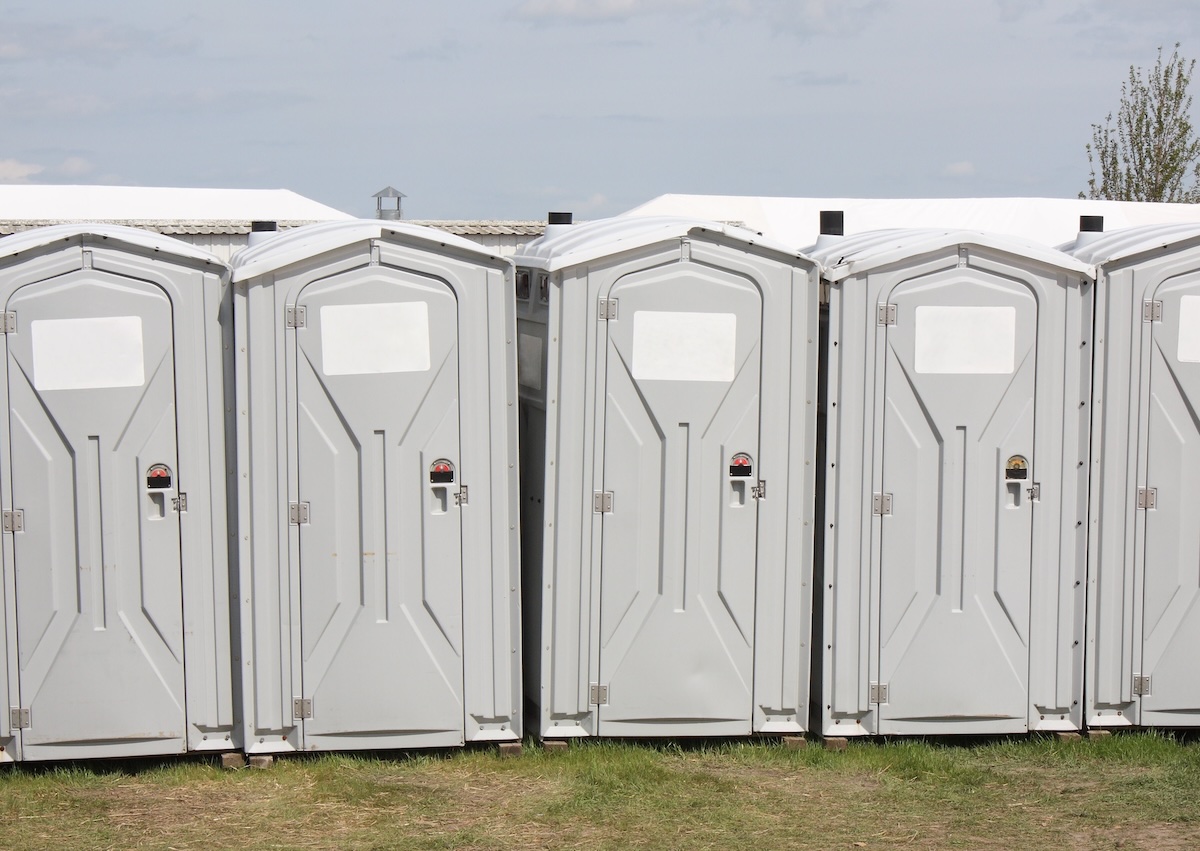
Good standard units are built around a few features that matter most when large numbers of people are cycling through throughout the day. Large holding tanks extend the time between necessary service calls. Odor-control ventilation—when properly designed—channels air flow upward and away from the interior, keeping the environment tolerable even in summer heat.
A coat hook or purse hook inside the unit is a small detail that’s appreciated more than you might expect, especially at food and drink events where guests are carrying things.
For most outdoor events and job sites, standard units are the right default choice. They’re practical, straightforward to place, and easy for service crews to maintain.
ADA Accessible Portable Toilets
Accessibility should be a baseline consideration for any event open to the public, not an afterthought. ADA-compliant portable restrooms are built around a flat-floor design that accommodates wheelchairs and other mobility assistance devices without the step-up threshold found in standard units.
These units are meaningfully larger than their standard counterparts. That extra space serves multiple purposes: it provides the turning radius a wheelchair user needs to maneuver comfortably, it accommodates assisted transfers for guests who need more room, and it works well as a family-size restroom for parents managing small children. Mechanically assisted doors, large easy-to-grasp handles, and properly positioned handrails make the unit operable for guests with varying levels of hand strength and dexterity. Rotary latches and thoughtfully placed paper holders are small details, but they add up to a unit that people can actually use independently.
At any public-facing event—food festivals, community fairs, outdoor concerts—ADA units should be distributed proportionally throughout your restroom layout, not clustered in one corner.
Luxury Portable Restroom Trailers
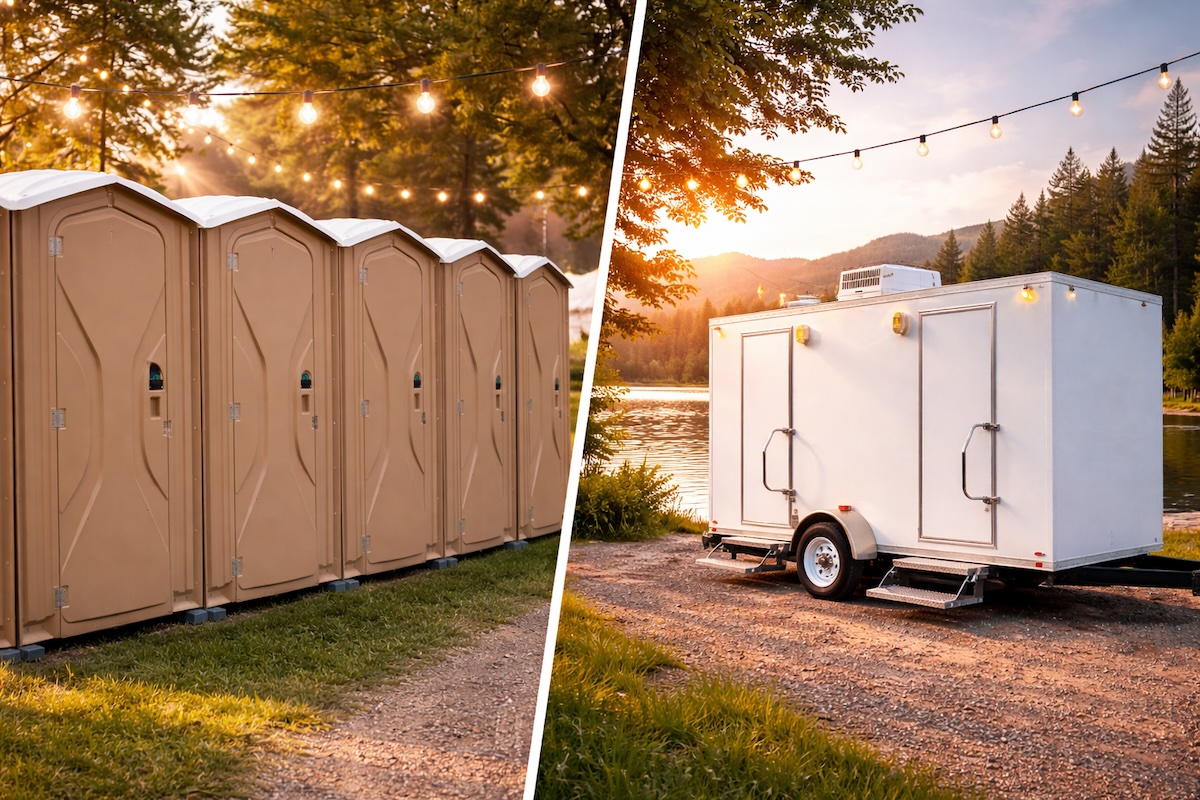
For events where the restroom experience is part of the overall impression—weddings, private corporate gatherings, charity fundraisers, upscale outdoor receptions—standard portable units aren’t the right fit. Comfort station trailers bring interior finishes, climate control, and flushing toilets to locations that don’t have permanent facilities.

Two-stall trailer units offer individual suites with genuine privacy: a lighted interior, air conditioning (a meaningful comfort when it’s 90 degrees outside), a fully functional sink, and toilets that flush into discreet holding tanks rather than visible bowls. The interior environment is closer to what guests would expect from a hotel lobby restroom than from a job site.
These trailers do require access to a standard 120V AC outlet, so power access is part of the site planning. But for certain types of events, that small logistical step is well worth it. When 200 guests in summer dresses and dress shirts are attending an outdoor celebration, the restroom experience shapes the overall memory of the event.
Free-Standing Handwash Stations
Portable restrooms handle the essential sanitation function, but handwashing is a separate need—and at any event where food is being served, it’s a critical one.

Free-standing handwash stations operate via foot pump, which serves two purposes: it activates the water flow without requiring guests to touch a handle, and it limits water waste over the course of a long day. Running water, soap, and paper towels are included. Used water is self-collected by the unit rather than draining onto your event surface, which keeps the area around the station clean.
These stations meet the safety standards that health departments apply to food service events, and placing them adjacent to food vendor areas—rather than only near portable toilet facilities—meaningfully increases the rate at which guests actually use them. At a summer food festival, that’s a practical public health measure, not just a checkbox.
How Many Portable Toilets Do You Need?
The most common planning mistake is underestimating. Here’s a simple framework to start with, but remember that there may be other guidelines or OSHA requirements depending on your purpose for renting the portable toilets.
For events with food and drink: The presence of food and beverages—especially alcohol—increases restroom usage significantly compared to a dry event of the same size and duration.
A commonly used starting benchmark is one standard unit per 50-75 guests for a four-hour event with food and alcohol. At that ratio, 500 guests requires 7-10 units; 1,000 guests requires 13-20. These numbers go up as event duration increases. A one-day festival is one calculation; a three-day event like the kind held in downtown Greenville, SC—where crowds cycle through morning, afternoon, and evening across multiple days—requires higher overall capacity with a regular service schedule built into the logistics plan.
Adjustments to make:
- Add time: Extend planned event hours by 30 minutes on each end for setup and teardown crews who arrive early and leave late.
- Account for peak periods: Restroom demand is not evenly distributed. Intermissions, set breaks, and the window right after a meal all create sharp peaks. Distribute units to reduce wait times during these moments.
- ADA units: Most industry guidance and local event permitting standards call for at least one ADA-compliant unit per event, with additional units as overall capacity scales. For larger public events, one ADA unit per 200 total guests is a reasonable baseline.
- Construction sites: OSHA requirements specify certain requirements for access to toilet facilities, which include specific thresholds that change based on crew size and project duration. Check current requirements against your specific situation.
Don’t forget handwashing: At minimum, one handwash station per four porta potties is a standard recommendation. For events with food service, additional stations positioned near food areas improve both hygiene and compliance with local health codes. Remember that if renting trailer-style portable restroom facilities, indoor sinks with running water are typically included inside as well.
Planning a Portable Restroom Layout
Where you place units matters as much as how many you have.
Distribute, don’t cluster. Guests will use the nearest available option. Clustering all your units in one location creates long walks for much of your crowd and uneven wear on individual units. Spread them across your event footprint.
Factor in traffic flow. Units positioned near event entrances, exits, main food and beverage areas, and stage or activity areas will see higher traffic. Build density in those areas.
Accessibility placement. ADA-compliant units should be on firm, level ground with clear pathways free of obstacles. A unit that meets ADA specifications but requires navigating a gravel slope or a crowded walkway to reach isn’t serving its purpose.
Ground surface and access for service vehicles. Service trucks need access to units for scheduled cleaning and pump-out. When you’re selecting placement, account for the route service crews will need to reach each unit, especially on multi-day events or longer construction projects.
Keep distance from food service areas—but not too far. Restrooms should be downwind from food service areas where possible, and far enough away that the proximity isn’t unpleasant. At the same time, placing them so far from food vendors that guests avoid the walk creates a hygiene problem. A good rule of thumb is a minimum of 100 feet from food prep areas.

What Separates the Best Portable Toilet Rental from the Others
Equipment quality matters, but service consistency is what determines how well things go on the day. Here’s what to look for when evaluating a portable restroom rental:
Service frequency. On multi-day events or job sites, units require regular cleaning and pump-out. Confirm the scheduled service frequency before you rent, and make sure it matches your usage volume. A unit that was clean when it arrived but hasn’t been serviced for three days of heavy use is a problem.
Delivery and pickup windows. Units should arrive with enough lead time for you to confirm placement before your event begins. Pickup should happen after your event or project concludes, not before.
What’s included in service. Clarify whether hand sanitizer, toilet paper, and deodorizer are included in each service visit or billed separately. At food festivals and community events, restocking mid-day is often necessary.
Unit condition. Well-maintained units arrive clean, deodorized, and with no pre-existing damage. Ask whether the rental company inspects units before deployment.
Local knowledge and responsiveness. For events in areas with specific permitting requirements—some municipalities require inspection of portable restroom placement at permitted public events—an experienced local provider can help you navigate those requirements in advance.
Portable Restroom Rental for Common Use Cases
Outdoor Festivals
Summer and fall festivals present some of the highest-demand scenarios for portable restroom rentals. Guests tend to stay longer, consume more food and beverage, and cycle through restrooms more frequently than at most other outdoor events. Pair standard units with at least one ADA unit and multiple handwash stations positioned near food vendor clusters.
For multi-day events—particularly those with separate daytime and evening attendance patterns—daily service is typically necessary to maintain acceptable conditions.
Construction
Construction site requirements are regulated under OSHA standards, which establish minimum ratios of toilets to workers and specify requirements for handwashing facilities. Standard portable units are the appropriate choice for most construction environments. Service frequency should match the crew size and planned project duration.
For longer projects, establishing a consistent pickup and service day avoids the situation where units are full or unsanitary on a high-traffic workday.
Private Events & Weddings
For private events where guest experience is a priority, luxury comfort station trailers are worth the additional cost. The difference between a standard portable unit and a climate-controlled, flushing trailer with interior lighting is significant for guests in formal attire. Site access for power (standard 120V outlet) and service vehicles needs to be confirmed during planning.
Community / County Fairs
Heritage fairs and agricultural events often run across multiple days and draw diverse audiences that include young children, older adults, and guests with mobility needs. Plan for a mix of standard and ADA units, position handwash stations near carnival food areas, and build service calls into a daily schedule rather than relying on single-day units for a weekend event.
Common Questions About Renting Portable Toilets
Q: How far in advance should I book?
For summer events, especially in regions with active festival calendars, several weeks to over a month are likely to be needed for a comfortable lead time. High-demand weekends in June, July, and early October can see available units book quickly.
Q: Do portable units smell bad?
Properly serviced units with adequate ventilation don’t carry the odor profile people may associate with the poorly-serviced porta potty category. Odor issues are almost always a function of inadequate service frequency relative to usage volume, not an inherent feature of the equipment.
Q: What about winter or cold-weather use?
Portable units are designed for outdoor conditions, but freezing temperatures affect holding tanks and chemical additives. Providers who operate year-round in cold climates use winter-specific formulations and can advise on appropriate measures.
Q: Can portable restrooms be placed indoors?
Standard and ADA units can technically be placed indoors if ceiling height and door clearance allow, though the logistics around service access are more complex. Luxury trailers require exterior placement with cord access to power.
A Note on Budgeting
Portable restroom rental costs vary by unit type, quantity, rental duration, service frequency, and geography. Standard units are the most economical option. Luxury restroom trailers carry a meaningful premium as they are a significant upgrade, but they are priced against their alternative—which, for many outdoor events, is asking guests to drive somewhere else.
Budget for delivery and pickup fees, which are sometimes separate from the unit rental rate. Budget for service calls on multi-day events. If you’re tight on budget, the place to economize is rarely unit count—an undersupplied event creates problems that are expensive in a different sense.
Final Thoughts
Portable restroom planning doesn’t generate the excitement of selecting menus, booking talent, or designing event layouts, but it shapes the overall guest experience in ways that most other logistics decisions don’t.
The person waiting in a long line, or discovering a unit that hasn’t been serviced, remembers it. The person who finds clean, accessible, and well-distributed facilities remembers the event.
Get the count right, distribute units thoughtfully, match the unit type to your audience and setting, and confirm the service schedule before anything else. The rest of your event gets to speak for itself.