
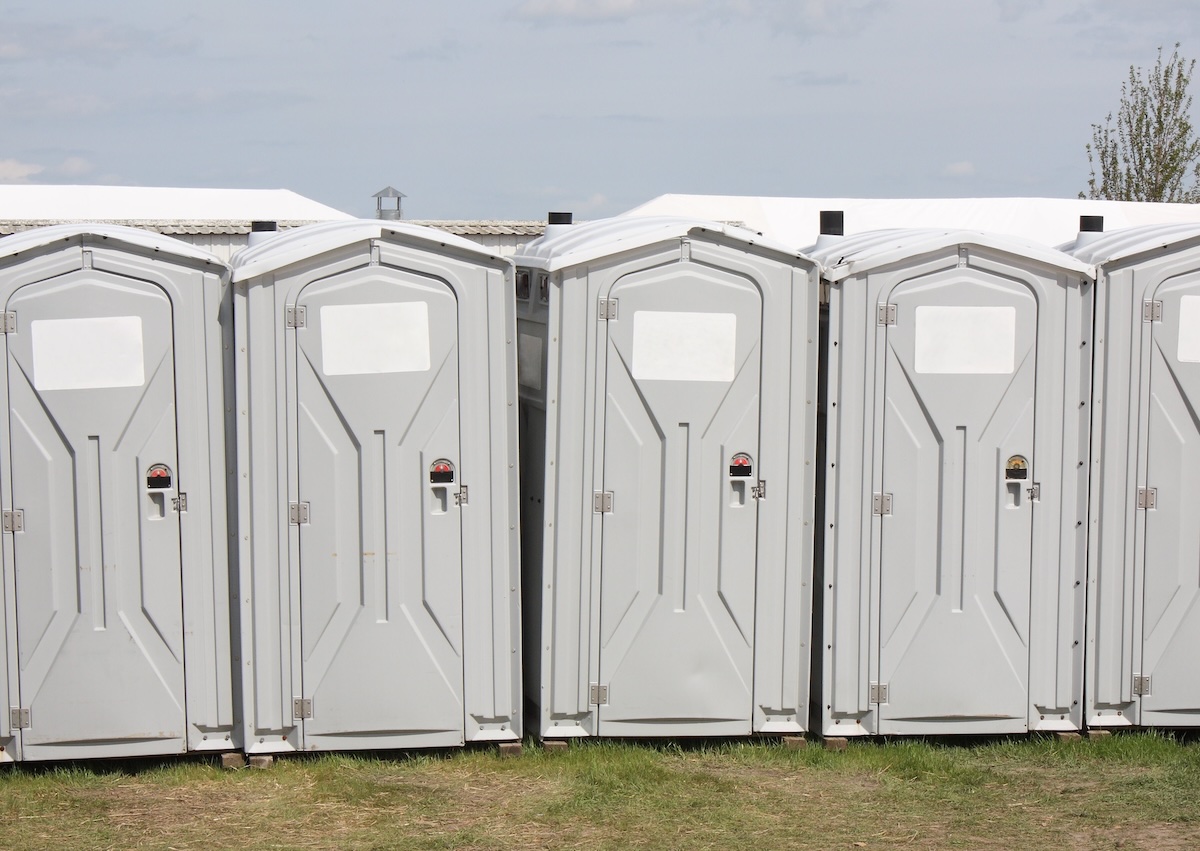
Outdoor events are built around details: the layout, the timing, the food, the parking, the weather plan, the guest experience, and the cleanup afterward. Restrooms are part of that same planning process, even though they’re often pushed to the bottom of the list. When the restroom setup is done well, guests barely think about it. They know where to go, lines move reasonably, the area stays organized, and the event feels better managed overall.
Planning for portable restroom rental is not only about renting enough units. It’s about choosing the right type of restroom for the setting, placing units where they’re easy to access, planning for handwashing, accounting for event length, and making sure delivery and servicing can happen without disrupting the event. A backyard wedding, a community festival, a race, and a construction-adjacent outdoor gathering can all have very different restroom needs, even if the guest count is roughly similar.
This guide walks through the main factors that help event organizers plan a clean, practical, and guest-friendly restroom setup for outdoor events.
Why Restroom Planning is Especially Important for Outdoor Events
Restrooms can shape how comfortable people feel at an outdoor event. Guests may not comment when the setup is convenient, but they will notice if restrooms are too far away, lines are too long, handwashing is missing, or the area feels poorly placed. Good restroom planning helps prevent those issues before they become distractions.
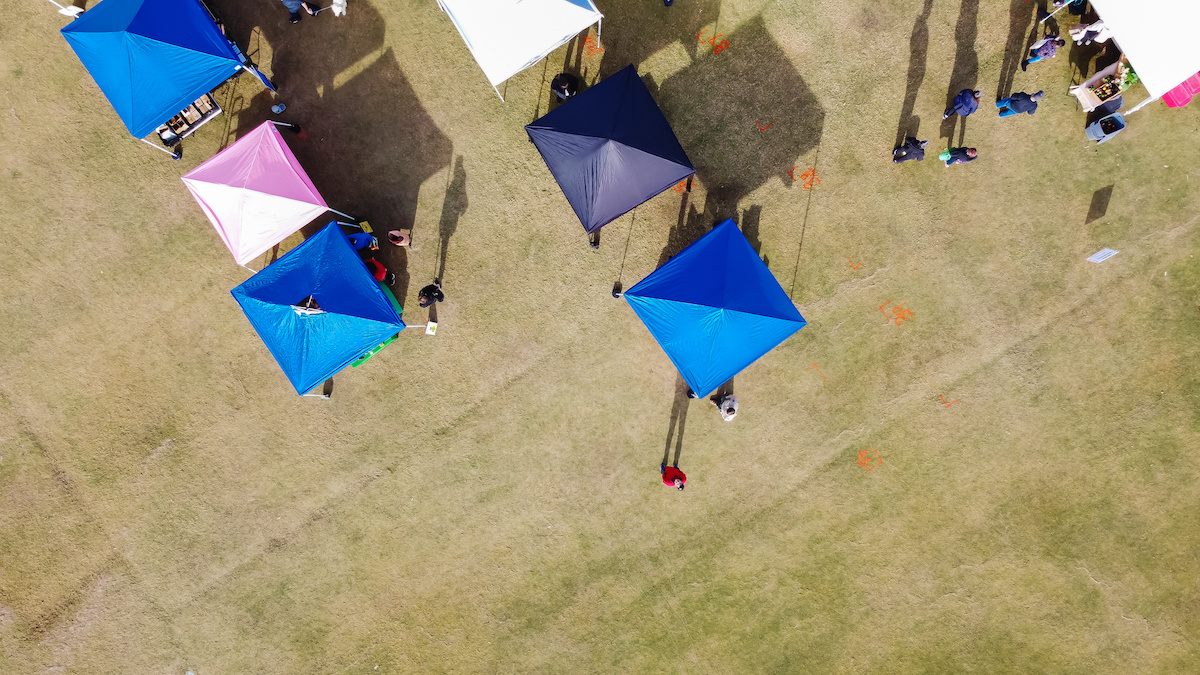
For event organizers, restroom planning also supports the flow of the entire space. Portable toilets should be easy to find without becoming the visual center of the event. They should be close enough for convenience but placed thoughtfully enough to protect the atmosphere of the gathering. This matters at formal events like weddings, but it also matters at festivals, races, church events, school functions, and private parties.
A strong restroom plan also reduces operational stress. Delivery crews need access, units need level ground, and longer events may require service planning. Thinking through those details early helps the event run more smoothly and makes cleanup simpler once everything is over.
What Types of Outdoor Events Need Portable Restrooms?
Portable restrooms are useful for any outdoor event where permanent facilities are unavailable, too far away, or not large enough to support the crowd. Even venues with bathrooms may need additional units if the event has a large guest count, multiple activity areas, or alcohol and food service.
Weddings and private celebrations often need restrooms because the event is held on private land, at a barn venue, near a lake, in a field, or in another outdoor setting where permanent facilities are limited. In those cases, comfort and appearance matter as much as basic function. Guests are usually dressed formally, the event may last several hours, and the restroom setup should feel appropriate for the occasion.
Festivals, concerts, fairs, and community events usually require more capacity and a more strategic layout. These gatherings bring steady foot traffic, peak usage periods, food vendors, and crowds moving between different areas. A single restroom cluster may not be enough if the event site is spread out.
Runs, races, sporting events, school events, church gatherings, corporate picnics, farm events, and private parties each come with their own planning needs. A race may see heavy restroom use before the start time, while a family reunion may need a smaller setup placed near a meal area. The best plan depends on how people will use the space throughout the day.
How Many Portable Restrooms Does an Outdoor Event Need?
The right number of portable restrooms depends on guest count, event duration, food and beverage service, alcohol availability, and expected traffic patterns. A short outdoor ceremony with fifty guests has very different needs than a six-hour festival with food trucks and live music, even if both are technically outdoor events.
Guest count is the starting point, but it should not be the only factor. Longer events require more restroom access because people stay on site longer. Events with meals or drinks increase usage. Events with alcohol usually require additional capacity because restroom demand rises. If the event has scheduled breaks, intermissions, halftime periods, or start-line rushes, those moments can create temporary spikes even when the overall attendance is manageable.
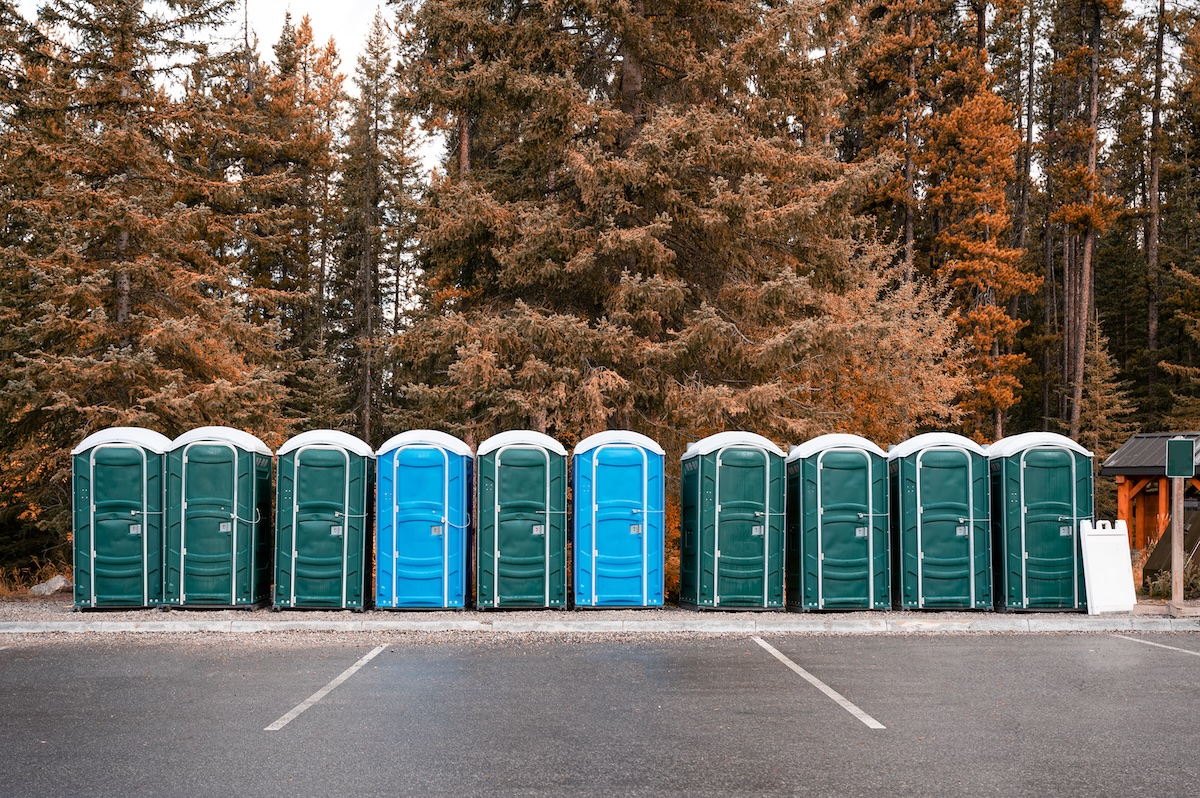
It is usually better to plan with a small cushion rather than cut the number too close. Too few units can create lines, frustrate guests, and put more strain on the setup. A slightly more generous restroom plan helps preserve the guest experience, especially for weddings, festivals, and public events where comfort and crowd flow matter.
Where to Place Portable Restrooms at an Event
Placement is one of the most important parts of outdoor event restroom planning. Restrooms should be easy to reach, easy to service, and placed in a way that fits the event layout. Poor placement can make even a sufficient number of units feel inconvenient.
A good location is close enough that guests can find it without a long walk, but not so close that it interferes with dining, ceremonies, seating, photo areas, vendor booths, or main gathering spaces. For weddings and formal events, placement often needs to be discreet while still being practical. For festivals and public events, visibility and crowd movement may matter more.
Ground conditions are also important. Portable restrooms should be placed on flat, stable ground whenever possible. Soft, muddy, uneven, or sloped areas can create problems for setup and guest use. Service access also needs to be considered. Delivery and pickup crews need a clear route to place and remove units, and longer events may require access for servicing.
Lighting should not be overlooked for evening events. Guests should be able to safely find and use restroom areas after dark. If the event runs into the evening, placing restrooms near existing lighting or adding temporary lighting can make the setup feel safer and more comfortable.
Choosing the Right Restroom Options for an Outdoor Event
Not every event needs the same restroom setup. Some outdoor events need straightforward, durable units that can support a steady flow of guests. Others need a more comfortable option that fits a formal setting. Many events benefit from a combination of portable restrooms and handwashing stations.
The best choice depends on the event type, expected attendance, duration, setting, and guest expectations. A community 5K, for example, may prioritize capacity and convenience near the start and finish areas. A wedding may place more emphasis on comfort, privacy, lighting, and a polished interior. A multi-day outdoor event may need a plan that includes both unit quantity and ongoing service.
Standard Portable Restrooms
Standard portable restrooms (sometimes referred to as “porta-potties”) are the most common option for outdoor events because they work well for a wide range of settings. They are practical, durable, and budget-conscious, making them a dependable choice for festivals, races, private parties, construction-adjacent events, school functions, church gatherings, and general outdoor use.
A well-designed standard unit provides the essentials guests need without overcomplicating the setup. Large holding tanks help support event use, while ventilation is designed to help manage odor and keep the unit more comfortable. Durability matters because outdoor restrooms may be exposed to sun, wind, changing temperatures, and frequent use throughout the event.
Standard units often include separate urinal and seated toilet areas, which helps improve usability and efficiency. Simple details, such as a coat hook for a purse or jacket, can also make a difference for guests. These units are especially useful when the event needs reliable restroom coverage across a larger area or when organizers need to balance capacity with budget.
Luxury Portable Restroom Trailer Rentals
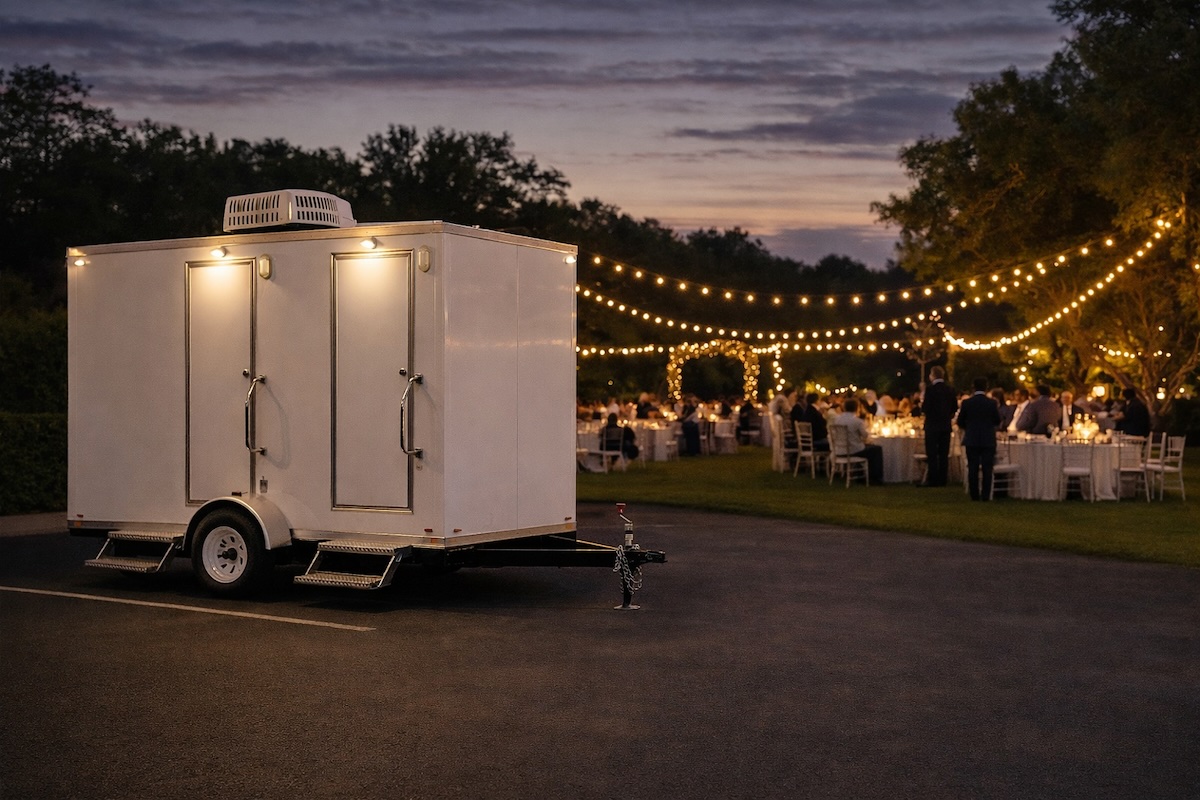
For formal events and guest-focused gatherings, a 2-stall “comfort station” restroom trailer rental can provide a more comfortable experience than standard units. These trailers are often a strong fit for weddings, corporate events, private parties, and upscale outdoor functions where the restroom setup should match the tone of the event.
A 2-stall trailer provides two individual suites, giving guests privacy and a more finished interior environment. Features such as lighting, air conditioning, flushable toilets, concealed holding tanks, and fully functional sinks make the experience feel closer to a traditional indoor restroom. This can be especially helpful for events where guests will be dressed formally, staying for several hours, or expecting a higher level of comfort.
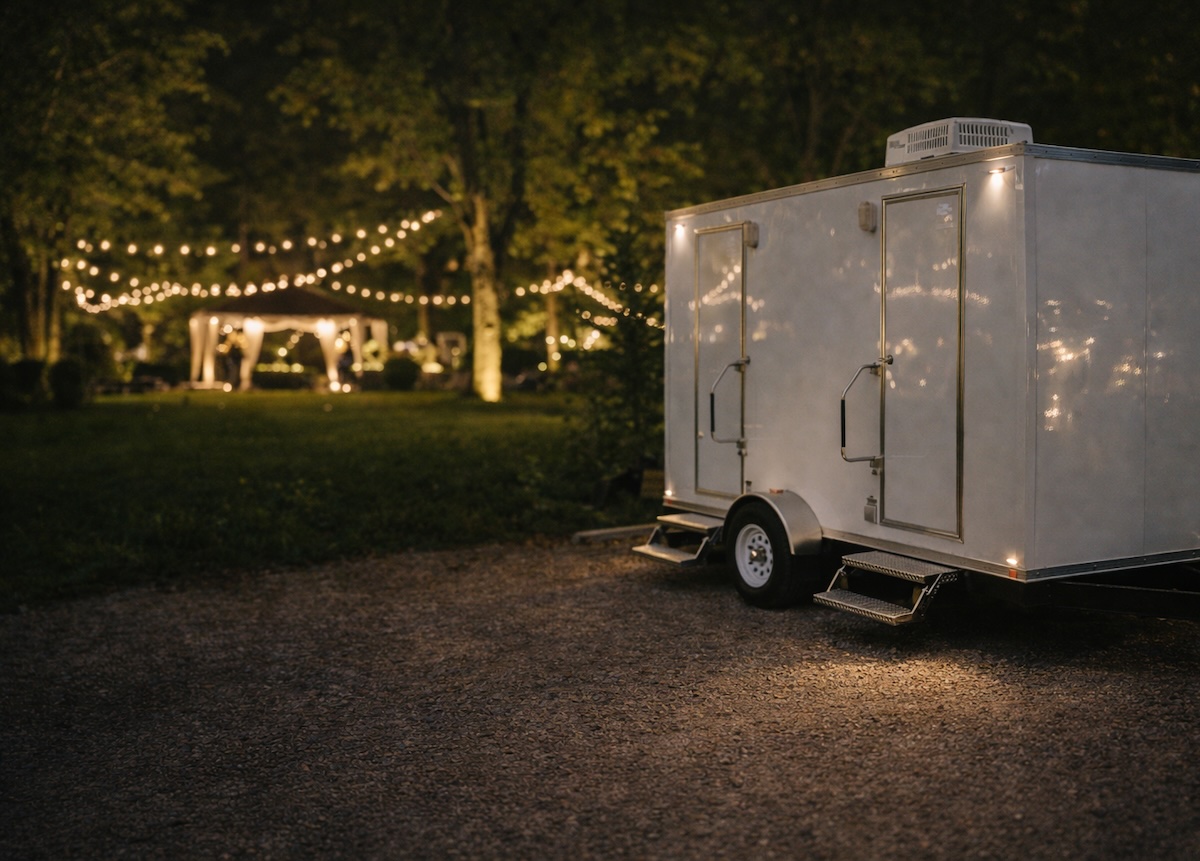
Restroom trailers do require more planning than standard portable units. A 2-stall comfort station typically needs access to 120V AC power, which means the event site must have a standard outlet or a suitable power plan. Placement should also account for delivery access, level ground, and the overall event layout. When those details are handled early, a restroom trailer can blend into the event much more naturally than a basic restroom cluster.
Free-Standing Handwashing Stations
Portable hand wash stations are an important part of outdoor restroom planning, especially for events with food, drinks, children, vendors, or longer guest stays. They give guests a dedicated place to wash their hands without depending only on sanitizer or existing facilities.
Free-standing handwash stations are flexible because they can be placed near restroom areas, food service zones, or other high-traffic parts of the event layout. Foot-pump operation provides running water while helping reduce waste, and soap and paper towels are typically included. This makes them a convenient addition for both events and job sites.
For outdoor events, handwashing stations improve the overall feel of the setup. They show that sanitation was considered as part of the guest experience, not treated as an afterthought. For job sites, handwashing access can also help meet safety and workplace requirements when required.
Restroom Planning for Outdoor Weddings
Outdoor weddings require a restroom plan that supports both comfort and appearance. Guests may be wearing formal clothing, walking across grass or gravel, and staying through a ceremony, cocktail hour, dinner, and dancing. The restroom setup should be easy to access without feeling like it is part of the main visual scene.
For many weddings, restroom trailers are worth considering because they provide a more polished guest experience. Interior lighting, climate control, sinks, and private suites can make the setup feel more appropriate for a formal occasion. Standard units can still work for casual weddings or supplemental use, but the expectations of the couple and guests should guide the decision.
Placement is especially important at weddings. Restrooms should be close enough for guests of all ages to reach comfortably, but far enough from the ceremony, dining area, and photo locations to preserve the atmosphere. Lighting, signage, and ground conditions should also be reviewed before the event day.
Restroom Planning for Festivals and Community Events
Festivals and community events usually need a more capacity-focused restroom plan. Attendance may be spread across several hours, and guests may move between vendors, stages, seating areas, food trucks, and activity zones. Restrooms should be placed where they support natural movement through the site.
For larger events, multiple restroom areas often work better than one large cluster. This helps prevent crowding in a single location and makes restrooms more convenient for guests in different parts of the event. Standard portable restrooms are commonly used because they provide practical coverage for high-traffic settings.
Handwashing stations are especially important when food vendors are present. Placing them near restroom areas and within reasonable distance of food zones helps support sanitation without interrupting traffic flow. Event organizers should also think about service access, since large or long-running events may require maintenance during the event window.
Restroom Planning for Runs, Races, and Sporting Events
Runs, races, tournaments, and sporting events have predictable restroom demand patterns. The highest demand is often before the event begins, especially near start lines, registration areas, parking areas, and team gathering spots. After the event, usage may increase again near finish lines, concessions, or awards areas.
Because demand comes in waves, placement is just as important as quantity. For a race, restrooms should be available near the starting area so participants are not forced to walk too far before lining up. For longer races or events spread across a large course, additional units may be needed at key points. For tournaments, restrooms should be convenient for athletes, spectators, coaches, and families.
Standard portable restrooms are often a practical choice for these events because they can be placed where the crowd needs them most. Handwashing stations add another layer of comfort, especially when concessions, team meals, or family areas are part of the event.
Handwashing, Sanitation, and Guest Comfort
Guest expectations around cleanliness are high, and outdoor events are no exception. A restroom setup feels more complete when handwashing is easy to access and the area is kept organized. This does not require overcomplicating the plan. It simply means pairing the right equipment with thoughtful placement.
Handwashing stations should usually be near restroom areas, but positioned so they do not block unit doors or create tight lines. For food-centered events, additional stations near eating or vendor areas may be useful. For family events, having visible handwashing access can make the setup feel more comfortable for parents and guests with children.
Servicing should also be considered for longer events. A short private event may only need delivery and pickup, while a long festival or multi-day gathering may need scheduled maintenance. Planning this ahead of time helps keep the event organized and prevents avoidable issues.
Delivery, Setup, Servicing, and Pickup
The logistics around portable restroom rentals are easier when the site plan is clear. Before delivery, organizers should know where units will be placed, how trucks will access the area, whether the ground is stable, and whether any gates, fences, parking areas, or event structures could block placement.
Setup should happen early enough that organizers can review the placement before guests arrive. For formal events, this also allows time to adjust signage, lighting, or screening if needed. For public events, early setup helps vendors, staff, and volunteers understand where restroom areas are located.
Servicing depends on the event length, attendance, and number of units. Some events only need standard delivery and pickup. Others may need maintenance during the event or between event days. Pickup should also be planned so it does not interfere with teardown crews, guests leaving, or other vendors removing equipment.
Common Outdoor Event Restroom Planning Mistakes
One of the most common mistakes is ordering too few restrooms. This usually happens when planning is based only on guest count and does not account for event length, alcohol, meals, or peak usage times. Even if the number seems close on paper, the guest experience can suffer if lines form during busy moments.
Another common issue is poor placement. Restrooms that are too far away, hidden without signage, placed on uneven ground, or positioned too close to food and seating areas can create frustration. A good location should balance convenience, discretion, safety, and service access.
Some organizers also forget about handwashing until late in the process. Handwashing stations are a simple addition, but they can significantly improve the overall setup. Waiting too long to book is another avoidable problem, especially during busy outdoor event seasons when availability may become limited.
Outdoor Event Restroom Planning Checklist
Before finalizing your event restroom plan, review the basics:
- Estimate total guest count and event duration.
- Account for meals, drinks, alcohol, and peak usage times.
- Decide whether standard units, handwashing stations, a restroom trailer, or a combination makes the most sense.
- Choose placement based on traffic flow, visibility, privacy, lighting, and service access.
- Confirm that the ground is level and accessible for delivery.
- Plan for handwashing near restroom areas and food service areas when appropriate.
- Consider accessibility needs for guests, staff, and vendors.
- Confirm whether the event requires servicing during longer rental periods.
- Schedule delivery early enough to review placement before guests arrive.
- Make sure pickup fits the event teardown plan.
Planning for Local Conditions
Outdoor restroom planning should also account for the specific location of the event. Terrain, weather, venue layout, parking access, and distance from permanent facilities can all affect the setup. An event in a mountain-area field, a neighborhood park, a lakefront property, or a rural private venue may each require different placement decisions.
Local event habits matter too. Some areas see more outdoor weddings and private property events, while others have more festivals, races, construction-related gatherings, or seasonal tourism events. A practical restroom plan should fit the way the space will actually be used, not just follow a generic formula.
Final Thoughts on Restroom Planning for Outdoor Events
A strong restroom setup is quiet, practical, and easy for guests to use. It does not need to draw attention. It simply needs to support the event, keep people comfortable, and prevent small logistical issues from becoming larger problems.
The best outdoor restroom plans start with the event itself: who is attending, how long they will be there, what they will be doing, and what level of comfort the setting calls for. From there, organizers can choose the right mix of standard portable restrooms, handwashing stations, and restroom trailers, then place them in a way that supports the flow of the event.
When restrooms are planned with the same care as parking, food, seating, and cleanup, the entire event feels more organized from start to finish.