
When most people search for portable bathrooms, they have a specific situation in mind: a weekend event, a construction site, a backyard party, a wedding. What they find is that “portable bathroom” covers a surprisingly wide range of equipment, from the basic porta potty people picture to fully climate-controlled luxury restroom trailers with flushing toilets, running water, and granite countertops. The right option depends entirely on the event, the guest count, the duration, and how closely the restroom experience should resemble what guests would find indoors.
Today, let’s look at how portable bathrooms work, what the different types involve, how to size your order, what delivery and servicing looks like, how portable bathroom rental is priced, and which situations might call for which option.
What “portable bathroom” actually means: the terminology explained
The terms portable bathroom, portable restroom, and porta potty all get used to describe self-contained sanitation units that can be placed anywhere without a permanent plumbing connection. In everyday usage, they are treated as interchangeable, and for most rental purposes, they refer to the same thing. A few distinctions are worth understanding before you start shopping.
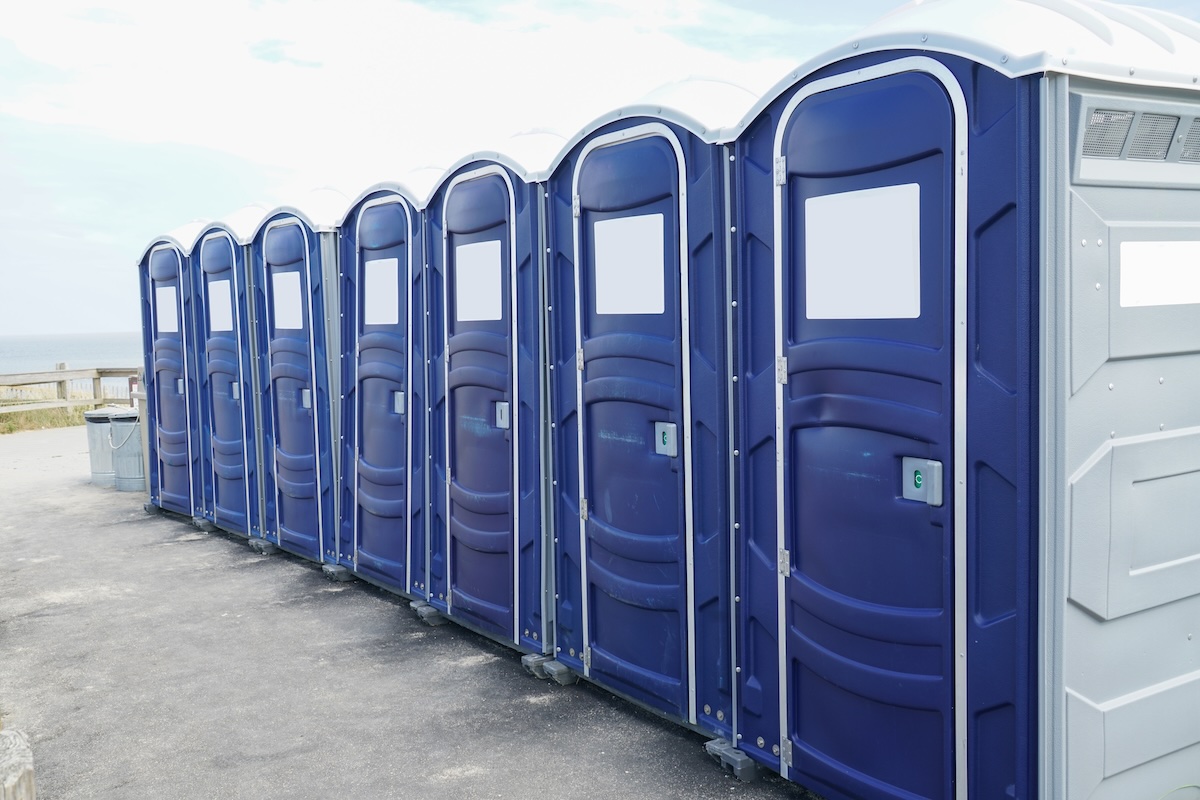
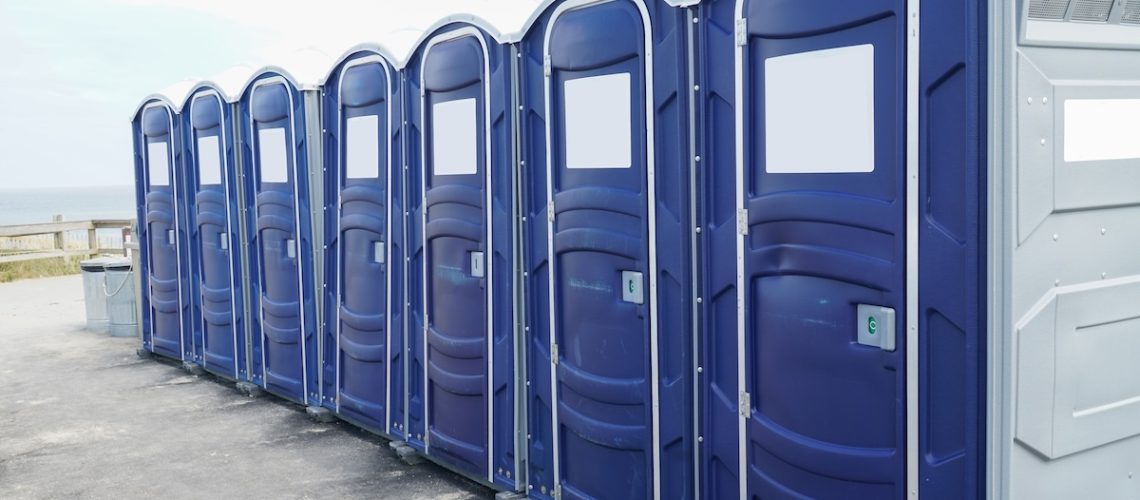
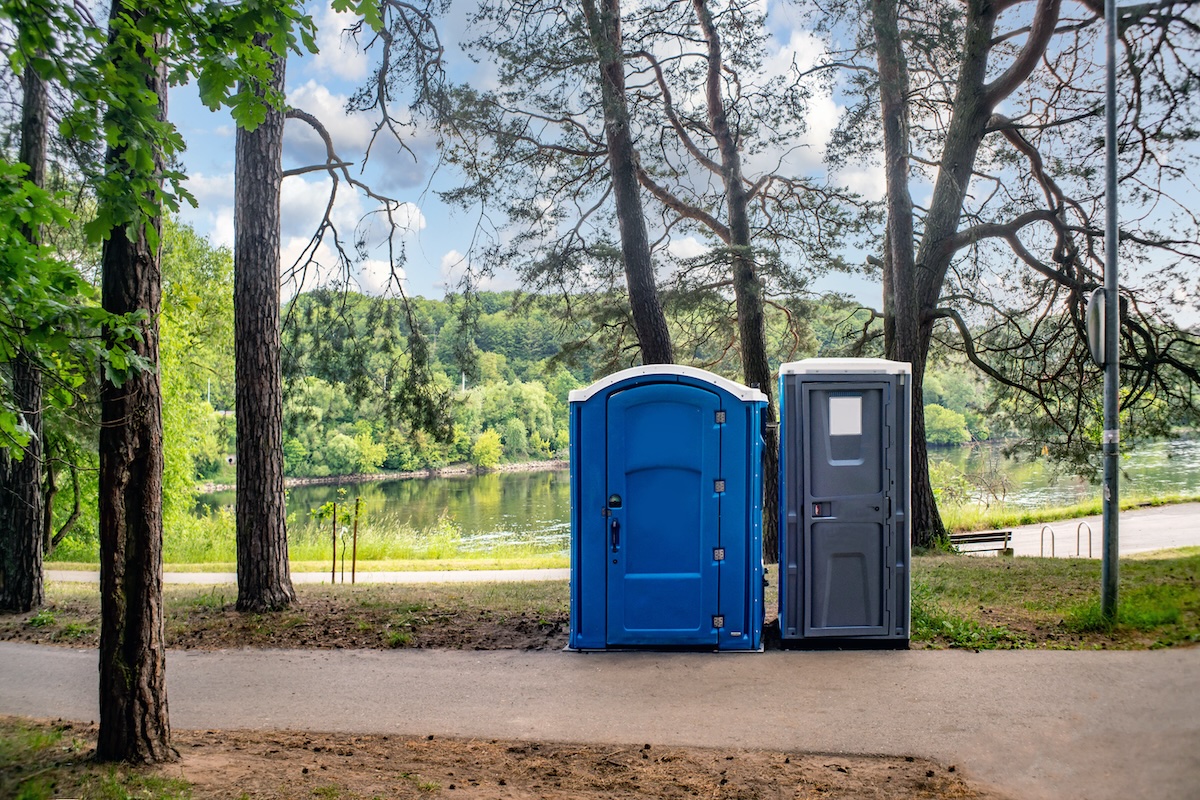
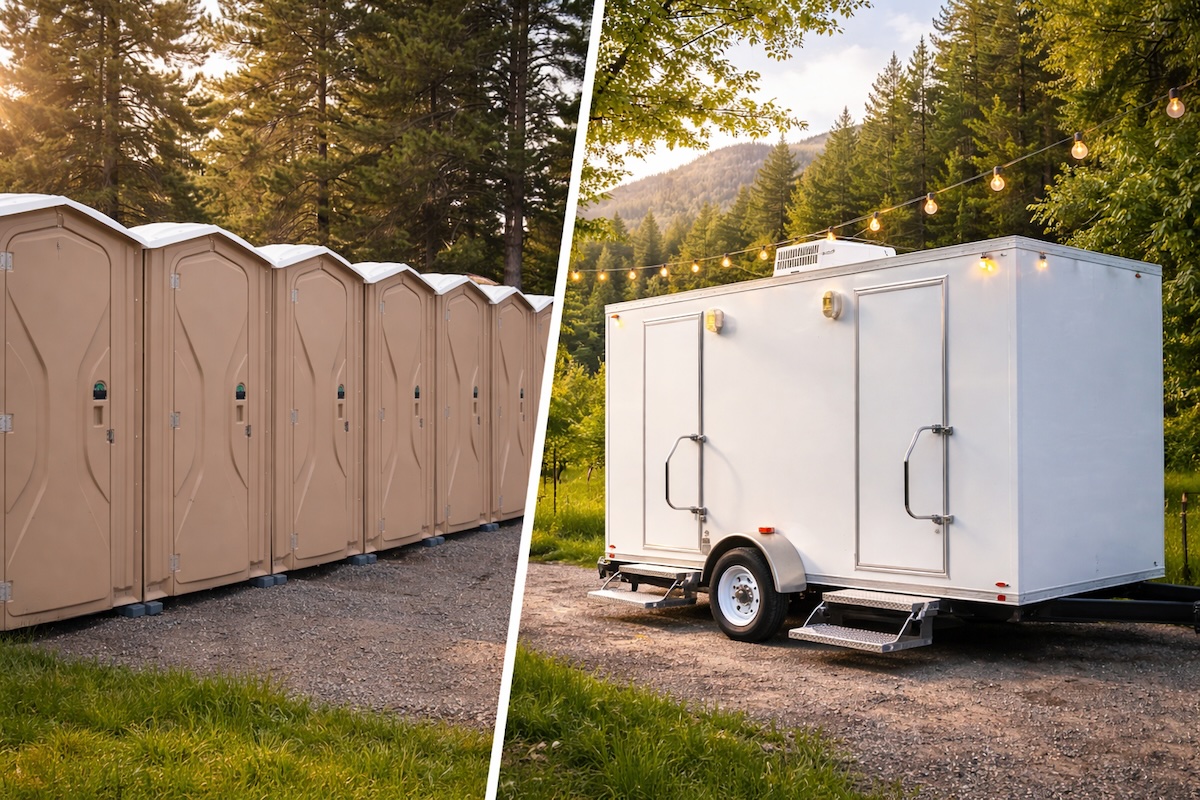
A standard porta potty (also called porta-potty, port-a-potty, or port-a-john) typically refers to a standard, self-contained plastic unit with a holding tank beneath a toilet seat. There is no running water, no sink, and no flushing mechanism in the traditional sense: waste drops into a sealed tank that holds a chemical deodorizing solution. These are the blue, green, tan, or gray plastic units seen at construction sites, festivals, and road races. The industry typically calls them portable restrooms, which is the preferred term in commercial rental contexts.
A portable bathroom, by the strictest definition, implies something closer to an indoor bathroom: a toilet that flushes, a sink with running water, and an enclosed space that resembles a permanent restroom.
That description fits luxury restroom trailers, which are towable units typically pulled by a truck and set up on-site with water hookups and waste tanks.
These are what most people have in mind when they search for portable bathrooms for weddings, upscale corporate events, or residential projects where a standard porta potty would feel out of place.
In practice, many portable sanitation companies and their customers will use all three terms somewhat loosely, so search results for “portable bathrooms” or “portable bathroom rental” will return both standard portable restrooms and luxury trailer options.
Tip: If you want a unit with a sink and running water, ask specifically about restroom trailers or luxury portable bathrooms. If a standard unit will do, a portable restroom or porta potty rental will typically be less expensive and faster to schedule.
Quick terminology reference: Porta potty, portable restroom, and portable toilet can often all refer to the same standard chemical-holding unit. Portable bathroom more often refers to a luxury restroom trailer with running water and a flush toilet, though the terms overlap in everyday usage. If in doubt, just describe the type of unit you need to the rental provider.
Types of portable bathrooms and portable restrooms
The portable sanitation industry offers more variety than many customers realize. Here is a breakdown of the main unit types, what they include, and which situations each suits best.
Standard portable restroom (porta potty)
The baseline unit in the industry. A self-contained plastic enclosure with a toilet seat and lid, a holding tank with chemical deodorizer, a urinal in some models, toilet paper, and a hand sanitizer dispenser. No running water, no sink. Units are typically blue, green, or gray and weigh around 150 lbs empty.
Best for: Construction sites, road races, outdoor festivals, tailgates, large public events, and any situation where volume of units matters more than amenities.
Deluxe or freshwater flush portable restroom
A step up from the standard outdoor toilet unit. These portable restrooms have a freshwater flushing mechanism that sends a small amount of water into the bowl with each flush, a foot-pump or button-operated hand wash station with soap, and a mirror. The waste still goes into a holding tank rather than a sewer connection. The interior is more finished and easier to keep clean during extended rentals.
Best for: Weddings and private events where standard porta potties feel inadequate but a full trailer is out of budget, multi-day events, and long-term construction or worksite placements where worker comfort matters.
High-rise or construction portable restroom
Designed for use on multi-story construction sites, these units have the same basic configuration as a standard portable restroom but are built to be lifted by crane or forklift to upper floors. They have reinforced bases and lift points rated for overhead loads. They are not typically available for standard event rentals and are ordered specifically for vertical construction projects.
Best for: High-rise and mid-rise construction projects where portable restrooms need to be positioned on elevated floors.
ADA-compliant accessible portable restroom
A larger format unit designed to accommodate wheelchair users and those requiring additional space. ADA-compliant portable restrooms are typically twice the width of a standard unit, with a low-threshold door, interior grab bars, a wider turning radius, and a ground-level footprint that meets ADA guidelines. They must be ordered alongside any public event rental to meet legal accessibility requirements.
Best for: Any event or site that requires ADA compliance, which includes most permitted public events, and any venue where guests may include wheelchair users or individuals with mobility limitations.
Portable handwashing station
A standalone unit with a fresh water tank, a waste water tank, a foot-pump or timed flow mechanism, soap dispensers, and a paper towel dispenser. Not a restroom unit itself, but a complement to standard portable restrooms, which do not have running water. Health codes for food service events typically require handwashing stations alongside portable restrooms.
Best for: Food festivals, catered events, farmers markets, and any site where food is being prepared or served and running water handwashing is required by local health regulations.
Luxury restroom trailer
A trailer-mounted portable bathroom unit with flushing toilets, vanity sinks with running water, climate control (heat and air conditioning), interior lighting, mirrors, soap and paper towel dispensers, and finished interiors that vary by provider from basic laminate to wood paneling, tile floors, and granite countertops. These require a water source connection (garden hose or water tank) and a waste tank or sewer hookup, and typically require shore power or a generator. They are the closest available equivalent to an indoor permanent bathroom in a portable format.
Best for: Weddings, upscale corporate events, film and television productions, large private parties, home renovations where interior bathrooms are out of service, and any setting where the restroom experience should be indistinguishable from an indoor facility.
Luxury restroom trailers: when a portable bathroom is a bathroom
The distinction between a standard portapotty and a luxury restroom trailer is worth spending more time on, because customers searching for portable bathrooms are often specifically looking for the trailer experience without knowing exactly what to call it.
A standard portable restroom, however clean and well-stocked, does not have running water. The hand sanitizer dispenser is the extent of hand hygiene available. There is no sink, no mirror above a countertop, no ability to wash hands with soap and water. For construction sites, road races, and most festivals, this is perfectly adequate. For a wedding reception or a corporate dinner event, it falls short of what most guests expect.
Luxury restroom trailers bridge that gap. They are trailer units, ranging from small two-station trailers that fit behind a pickup truck to large multi-stall trailers that can serve several hundred guests, pulled to the event site and set up with connections to a water supply and a waste receptacle. The interior finish level varies considerably between providers and price points. Entry-level trailers have commercial fixtures, fluorescent lighting, and laminate surfaces. Premium trailers have wood or tile flooring, vessel sinks, pendant lighting, music systems, and décor that matches upscale event aesthetics.
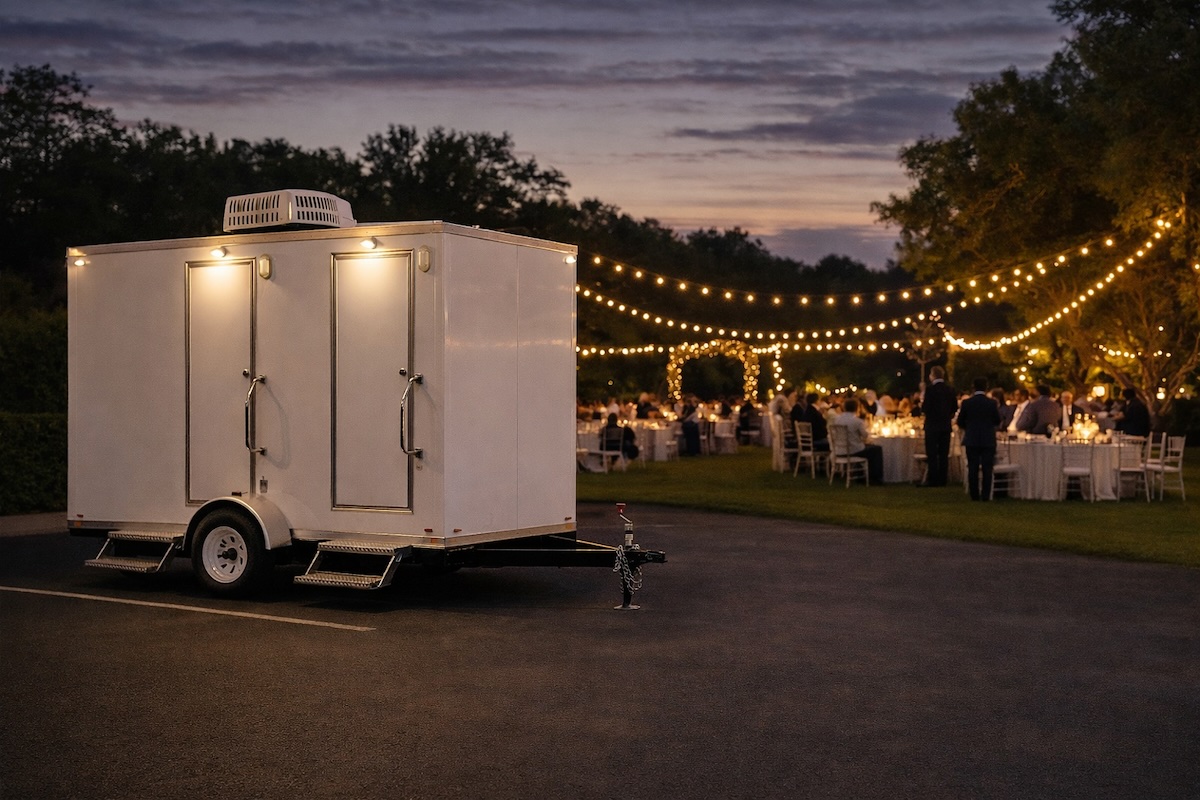
The practical requirements for a luxury restroom trailer are more involved than a standard portable restroom drop-off. The provider needs to know the site layout in advance to plan the trailer position and run the water and power connections. Most trailers require a 20-amp or 30-amp electrical connection or a generator. Water supply is typically via a standard garden hose connected to a spigot within 50–100 feet of the trailer, or via a water tank that the provider fills before the event. Waste collects in an onboard tank that is pumped out by the provider after the event.
Trailer capacity matters in a way that individual porta potty counts work differently. A single two-station luxury restroom trailer can serve approximately 50–75 guests at a three to four hour event. A four-station trailer can serve 100–150 guests. For larger events, multiple trailers are typically required. Your provider will help size the trailer configuration to your guest count and event duration.
How to determine how many units you need
Sizing a portapotty or restroom trailer order is one of the more common points of confusion in portable bathroom rental. The right number depends on four factors: guest or worker count, event duration, whether alcohol is being served, and the ratio of men to women.
The industry standard formula for events is one portable restroom per 50 guests for events of up to four hours. For events running six hours or more, increase to one unit per 35–40 guests. Alcohol service increases restroom usage by roughly 30–40%, so events with an open bar should size up accordingly. Construction site guidelines from OSHA require one portable restroom for every 20 workers for sites without access to permanent facilities, with at least one unit serviced per week.
| Scenario | Recommended Units | Notes |
|---|---|---|
| Event up to 4 hours, no alcohol | 1 per 50 guests | Minimum 2 units for any event |
| Event up to 4 hours, with alcohol | 1 per 35 guests | Alcohol increases usage 30–40% |
| Event 5–8 hours, no alcohol | 1 per 35–40 guests | Consider mid-event servicing for large groups |
| Event 5–8 hours, with alcohol | 1 per 25 guests | Add attendant service for upscale events |
| Multi-day outdoor event or festival | 1 per 50 guests per day | Daily servicing required |
| Construction site (OSHA) | 1 per 20 workers | Weekly servicing minimum per OSHA standards |
| ADA accessible units | At least 1 per event or site | Required for most permitted public events |
When in doubt, order one more unit than you think you need. The incremental cost of an additional portable restroom is small relative to the guest experience cost of running short. Most rental companies will pick up any unused units without penalty if you call ahead.
Portable bathroom rental: what the process involves
Renting a portable bathroom or portable restroom is typically a simple process for most events and sites, but a few steps determine whether the experience goes smoothly or becomes a logistical problem on the “day of”.
Quote and booking
Contact your local portable restroom rental company with your event date, location, approximate guest or worker count, and rental duration. Ask about unit types, pricing, delivery windows, and servicing options. For luxury restroom trailers, additional questions about power and water connections apply. Confirm the booking in writing and ask for a confirmation with the unit count, unit type, delivery time, and pickup date.
Site assessment and placement planning
Identify where the units will be placed before delivery day. The delivery truck needs vehicle access to the placement location: most standard portable restroom delivery trucks require a clear path at least 10 feet wide and with no overhead obstruction below 14 feet. Placement should be on reasonably level ground away from food service areas, main pedestrian flow, and the primary event view lines. For luxury trailers, the placement location also needs to be within reach of a power source and water supply.
Delivery and setup
Most rental companies deliver one to two days before the event or on the morning of, depending on your preference and their schedule. Standard portable restrooms are unloaded by a driver and positioned using a hand truck or dolly. Luxury trailers require more involved setup: the provider will level the trailer, run connections to water and power, and confirm operation before leaving the site. Ask your provider what time window to expect for delivery and how long setup takes.
Servicing during the rental (if applicable)
For single-day events, units are typically serviced after pickup. For rentals lasting more than one day or for events with high usage, servicing during the rental keeps units clean and functional. Servicing involves pumping the waste tank, rinsing and cleaning the interior, restocking toilet paper and hand sanitizer, and refreshing the chemical solution. Multi-day event rentals should include at minimum one service per day.
Pickup and removal
At the end of the rental period, the provider returns to pump any remaining waste, clean the units, and load them for transport. Standard portable restrooms require vehicle access to the same location they were delivered to. Make sure the site remains accessible through the end of the rental period. For luxury trailers, the provider will disconnect power and water, drain the waste tank, and haul the trailer off-site.
Delivery, placement, and site requirements
Placement decisions affect both the guest experience and the logistics of delivery and pickup. A few principles apply regardless of unit type.
Distance from the event: Portable restrooms should be close enough that guests are not walking a significant distance, but not so close that they are visible from dining or ceremony areas. For most events, 100–200 feet from the main event space is a reasonable target. Consider placing them behind a natural barrier such as trees or shrubs, or using privacy screening panels that many rental companies offer.
Lighting: For evening events, ensure the portable bathroom area has adequate lighting. String lights, solar path lights, or a generator-powered light stand will make the restroom area accessible without guests stumbling around in the dark.
Ground conditions: Units should be placed on level, stable ground. Soft or uneven ground can cause standard portable restrooms to tip, and luxury trailers require leveling legs to be stable. If the ground is soft after rain, notify your provider so they can bring equipment to support the units.
Truck access: The delivery vehicle needs a clear path to the placement location. For most standard portable restroom deliveries, this means a width of at least 10 feet and overhead clearance of at least 14 feet through any gates, under any trees, and past any obstacles. Luxury trailer deliveries require additional turning radius for the tow vehicle and trailer. Walk the access route before delivery day and flag any concerns with your provider in advance.
Setback from septic and water features: Most local regulations require portable restrooms to be placed a minimum distance from bodies of water, wells, and storm drains. Your provider will typically know local requirements, but if you are placing units near a pond, stream, or well, ask specifically about setback requirements in your area.
Servicing and maintenance during rental
How long a portable restroom remains clean and functional is directly related to how frequently it is serviced relative to how heavily it is used. Being aware of what servicing involves helps you know what to request and what to expect.
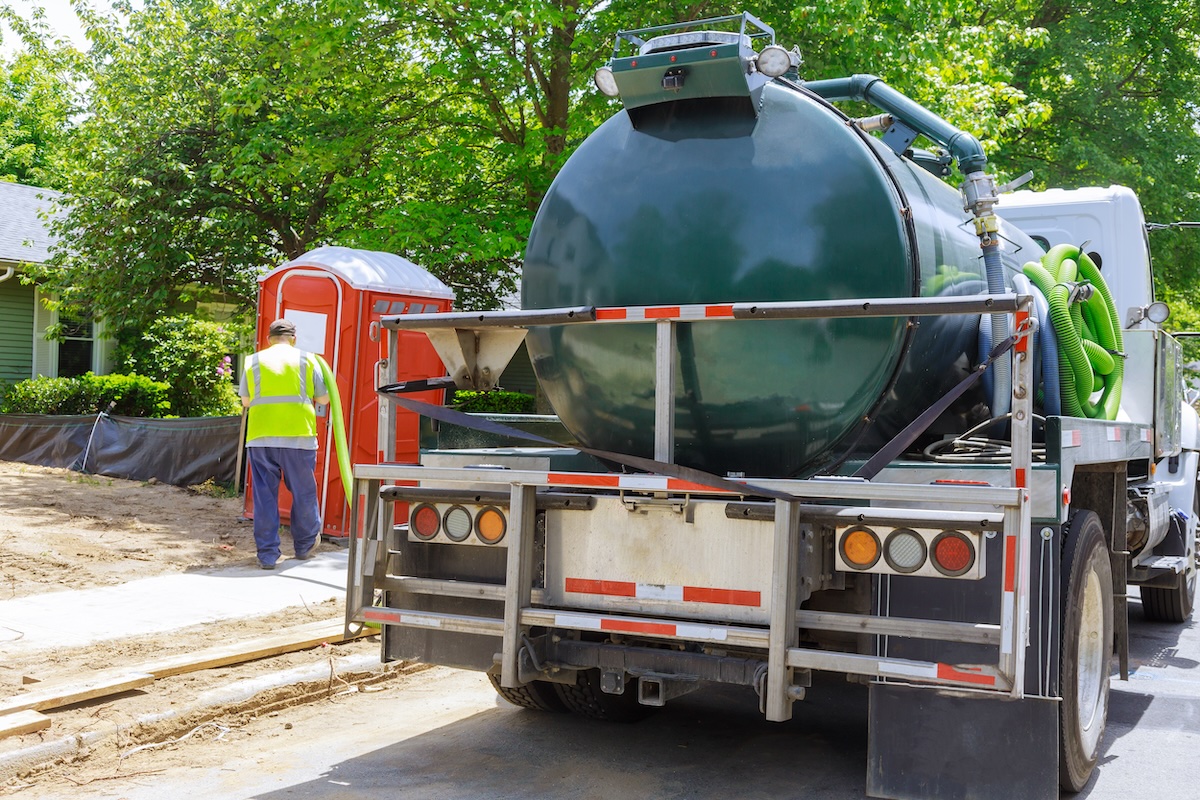
A standard service visit involves pumping the waste and chemical solution from the holding tank into the service truck’s waste tank, rinsing the bowl and interior surfaces, wiping down the walls and door, restocking toilet paper and hand sanitizer, and adding fresh chemical deodorizer to the holding tank. A full service of one unit takes approximately ten to fifteen minutes. For large events or construction sites with many units, scheduling service at a low-traffic time of day (early morning) keeps disruption minimal.
For a single-day event of around 6 hours or less, standard portable restrooms are typically serviced after pickup rather than during the event. For events longer than 6 hours, for events with a very high guest-to-unit ratio, or for upscale events where unit cleanliness throughout the day is a priority, mid-event servicing may be inquired about at booking. Some rental companies offer attendant service for premium events, where a company representative is on-site throughout the event to restock supplies, clean surfaces between uses, and manage any issues that arise. For weddings and high-end corporate events, attendant service may be worth the additional cost, though these type of events would benefit from luxury portable restroom trailer rental rather than renting basic portapotties.
Long-term construction site rentals are typically serviced on a weekly schedule, which meets OSHA minimums. Sites with higher worker density or in warmer climates where waste breaks down faster may benefit from twice-weekly service. If units are being heavily used and weekly service is not keeping pace, discuss an adjusted schedule with your provider.
ADA-compliant and accessible portable restrooms
ADA-compliant portable restrooms are a legal requirement for most permitted public events, and a practical necessity for any event where guests may include people who use wheelchairs or have mobility limitations. The requirements apply regardless of whether the event is on public or private property if it is open to the public.
An ADA-compliant portable restroom must meet several dimensional and equipment requirements: an interior turning radius of at least 60 inches for wheelchair maneuverability, a door opening of at least 32 inches clear width, grab bars positioned at the correct height on the side and rear walls, a toilet height of 17–19 inches, and a ground-level threshold with no raised lip that would impede wheelchair entry.
Standard portable restrooms, even large ones, do not meet these requirements. ADA units are a distinct product category and must be specifically ordered. Most rental companies stock them alongside standard units and will flag the requirement when you describe your event. The typical guideline is one ADA unit per event regardless of size, with an additional unit per 20 standard units for larger events.
Placement matters for accessible units. ADA portable restrooms should be positioned on firm, level ground with a clear, unobstructed approach from the accessible path of travel to the event. A portable restroom sitting in soft ground with no stable surface leading to it is technically compliant equipment placed non-compliantly. Ask your provider about placement surface requirements and whether they provide surface matting for soft ground events.
Portable bathroom rental cost breakdown
Portable bathroom rental pricing varies by region, unit type, rental duration, and whether servicing is included. Standard portable restrooms for a single-day event are priced differently from long-term construction site rentals, and luxury restroom trailers are priced per event based on trailer size and the level of finish. Handwashing stations, ADA units, mid-event servicing, and attendant service are typically priced separately.
What affects price: Geographic location has a significant effect on portable restroom rental pricing. Delivery distance from the provider’s base of operations, the number of units required, the rental duration, and the time of year all factor into the final quote. The best way to get an accurate number for your specific event or site is to contact a local provider directly with your date, location, unit count, and any servicing requirements.
What is typically included: Standard event rental pricing usually includes delivery, the unit stocked with toilet paper and hand sanitizer, and pickup with servicing after the event. Confirm what is included when you get your quote, as inclusions vary by provider.
Choosing between a standard porta potty and a luxury trailer
The decision comes down to the event type, the guest expectation, and the budget. A few questions help narrow it down:
Choose standard portable restrooms when:
The event is a festival, race, sporting event, or any setting where high volume and low cost per unit matters more than the restroom experience. The guest count is large enough that a trailer would require multiple units at much higher cost. The event is a construction site, worksite, or any project application. Guests have expectations calibrated to an outdoor or worksite context. You need ADA compliance at low cost alongside standard units.
Choose a luxury restroom trailer when:
The event is a wedding, upscale corporate function, private party, or any setting where the restroom experience is part of the overall event impression. Guests are dressed formally. Children or elderly guests will be in attendance and the standard porta potty experience is not appropriate. You are hosting a home renovation and need a bathroom that functions like an indoor one. The site has a reliable water source and electrical hookup, or you can arrange a generator.
Consider deluxe flush units as a middle ground when:
The event is semi-formal or the guest profile is mixed. Budget does not stretch to a luxury trailer but a standard porta potty feels inadequate. The rental duration is longer than a single day and fresh water flushing will keep units cleaner with less frequent servicing. You want the option of handwashing but cannot connect to a water supply for a trailer.
Frequently asked questions
What is the difference between a portable bathroom and a portable restroom?
In industry usage, portable restroom and porta potty refer to the standard self-contained chemical holding unit with no running water. Portable bathroom more often refers to a luxury restroom trailer that has flushing toilets, running water sinks, and a finished interior. In everyday language, all three terms get used interchangeably, but if you want a unit with a sink and running water, ask specifically about restroom trailers to avoid confusion.
Do portable bathrooms have sinks?
Standard portable restrooms and porta potties do not have sinks with running water. They include a hand sanitizer dispenser. Deluxe or freshwater flush models have a foot-pump wash station with limited water. Luxury restroom trailers have full vanity sinks with running water, soap dispensers, and mirrors. Standalone handwashing stations can be rented alongside standard units to provide soap-and-water handwashing at an event.
How far in advance should I book a portable bathroom rental?
For standard events on popular dates (summer weekends, holiday weekends, peak wedding season), four to six weeks in advance is recommended. For larger events requiring multiple units or luxury trailers, eight to twelve weeks gives you the best selection and pricing. For construction site rentals with ongoing needs, most providers can accommodate shorter lead times. Last-minute bookings for peak weekends carry the risk of limited availability, so earlier is always better.
How many porta potties do I need for 100 people?
For a four-hour event with no alcohol, two to three standard portable restrooms for 100 guests meets a common rule of thumb of one per 50 guests, with a small buffer. If the event includes an open bar or runs longer than four hours, three to four units is more appropriate. For mixed-gender events, distributing units evenly and including at least one ADA-accessible unit rounds out the order. When in doubt, round up rather than down.
Can a luxury restroom trailer be used without a water hookup?
Some luxury trailer providers offer self-contained units with large onboard freshwater tanks that do not require an external water connection. The provider fills the tank before the event. These units have a limited water supply and are typically suited for events of six hours or less and smaller guest counts. For longer events or larger groups, an external water connection ensures the supply does not run out during the event. Ask your provider whether their trailers are self-contained or require a hookup.
What happens to the waste in a portable restroom?
Waste collects in a sealed holding tank beneath the toilet. The tank contains a chemical solution (typically a blue or green deodorizing concentrate) that breaks down waste, controls odor, and dyes the contents to obscure visibility. When the provider services the unit, they pump the waste from the holding tank into a sealed waste tank on the service truck. That waste is then disposed of at an approved waste treatment facility. Portable restroom waste is classified as black water and is handled under the same regulatory framework as sewage.
Can portable restrooms be used in cold weather?
Yes. Standard portable restrooms function in cold weather, though the chemical solution in the holding tank can freeze in sustained sub-freezing temperatures. Providers in cold-weather markets use winter-formula deodorizing chemicals with a lower freeze point. For extended winter rentals, heated portable restrooms are available in some markets: units with a small electric heater inside. Luxury restroom trailers have climate control that includes heat, making them fully functional in cold weather as long as a power source is available.
Do I need a permit for a portable bathroom rental?
Permit requirements vary by location and event type. For private events on private property, most municipalities do not require a permit for temporary portable restroom placement. For public events, events on public property, or events requiring an event permit, portable restroom placement is often part of the permit application and subject to count and placement requirements. Your rental provider will typically know the local requirements for the area they serve. When in doubt, check with your local health department or permit office.
Are portable bathrooms required at construction sites?
Yes. OSHA standard 29 CFR 1926.51 requires employers to provide toilet facilities for workers when permanent sanitation facilities are not available. The minimum is one portable toilet per 20 workers, serviced at least weekly. For sites with 200 or more workers where facilities are more than a five-minute walk or one-quarter mile away, additional facilities may be required. Individual states may have requirements that exceed the federal OSHA minimum.
What should I look for in a portable bathroom rental company?
Look for a provider with good local reviews, clear communication, and transparent pricing. Ask about their cancellation and rescheduling policy upfront, particularly if your event is weather-sensitive. A provider who asks questions about your event before quoting, rather than just sending a price list, is usually a good sign: it means they are thinking about what your situation actually requires rather than just booking a unit and moving on.