
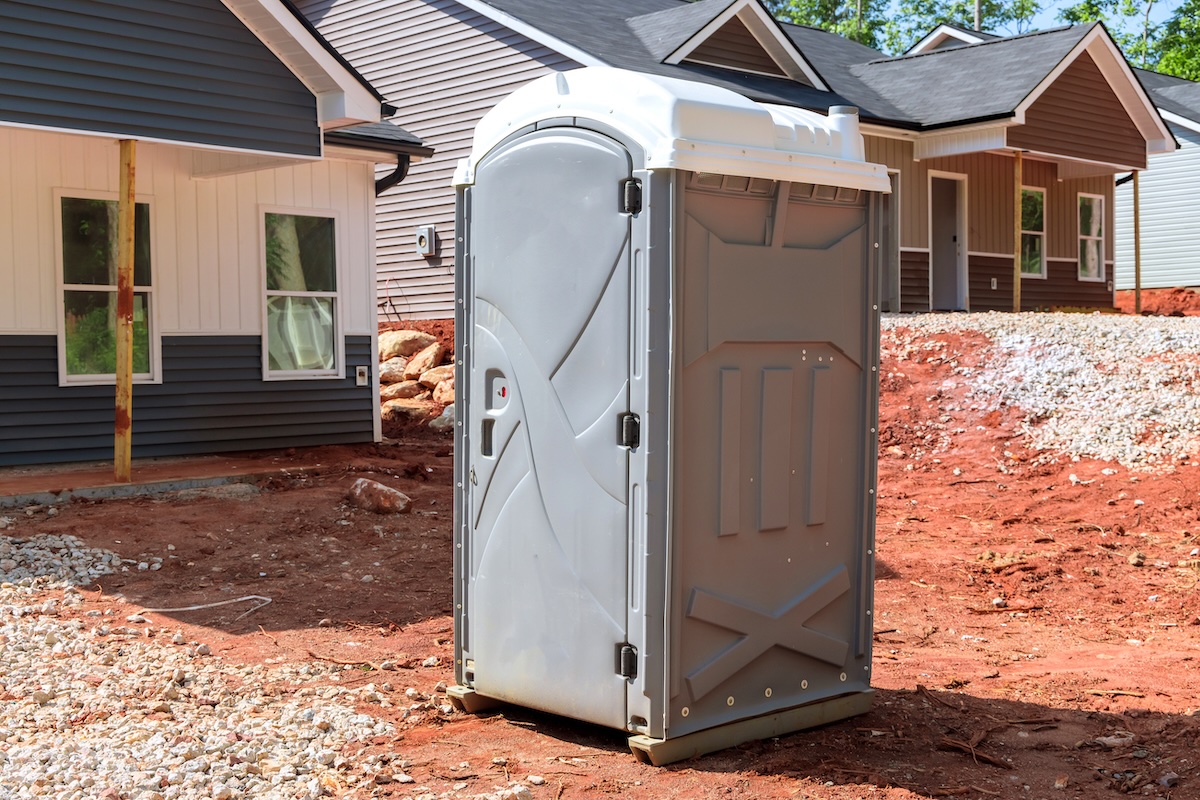
A porta john rental brings a working restroom to places without plumbing: a backyard wedding, a construction site, a church festival, a ballfield on tournament weekend.
MCS Portable Restrooms has provided porta john rental in Colorado Springs for more than 30 years, and now rents porta johns for the Upstate South Carolina region as well, including Greenville, Anderson and Seneca.
Porta john is one of many names for a portable restroom, along with porta potty, port-a-potty and Johnny-on-the-spot. Whatever the name, the unit is a self-contained stall with a seat, a holding tank and a locking door, delivered to the site and serviced on a schedule.
What a Porta John Rental Includes
A porta john rental from MCS includes delivery, setup and pickup along with the unit itself. Each unit is set on level ground in the spot you choose.
Units arrive stocked with toilet paper and hand sanitizer. The holding tank is charged with the blue liquid used in portable toilets, a solution that sanitizes the tank and controls odor between visits.
Rentals that run past a single event add scheduled service visits. At the end of the rental, the tanks are emptied, the units are loaded, and the crew does a final check of the area.
Types of Porta Johns for Rent
MCS rents four kinds of units, and a single rental can combine two or more. A construction site might pair standard porta johns with a hand wash station. A wedding might bring in a comfort station for guests and keep a standard unit near the parking area for vendors and the setup crew.
Standard and ADA units are fully self-contained, so they need no power or water hookup. Hand wash stations carry their own fresh water. Comfort stations run on a standard electrical outlet.
| Unit | Common uses | What the site needs |
|---|---|---|
| Standard porta john | Job sites, parties, festivals, parks and sports fields | Level ground and a clear path for service |
| ADA-accessible porta john | Public events, venues with guests who use mobility devices, families with young children | Level, firm ground on an accessible route |
| Hand wash station | Food service areas, job sites and any event with porta johns | Level ground; water is carried on the unit |
| Comfort station | Weddings, formal receptions and upscale events | A standard 120-volt outlet within reach |
Standard Porta Johns
The standard unit is the familiar single stall used at job sites, parks and outdoor events. MCS standard units have a separate urinal and a seated toilet inside, along with a large holding tank.
ADA-Accessible Porta Johns
ADA units are built for wheelchair users, with a flat floor, a large door with mechanical assist, handrails, and handles and latches that are easy to grip.
The extra interior space also makes an ADA unit useful as a family restroom, for a parent helping a young child or for anyone who needs more room to move.
Hand Wash Stations
MCS portable hand wash stations deliver running water through a foot pump, so nobody has to touch a faucet. Soap and paper towels come stocked, and used water collects inside the unit instead of pooling on the ground.
Comfort Stations
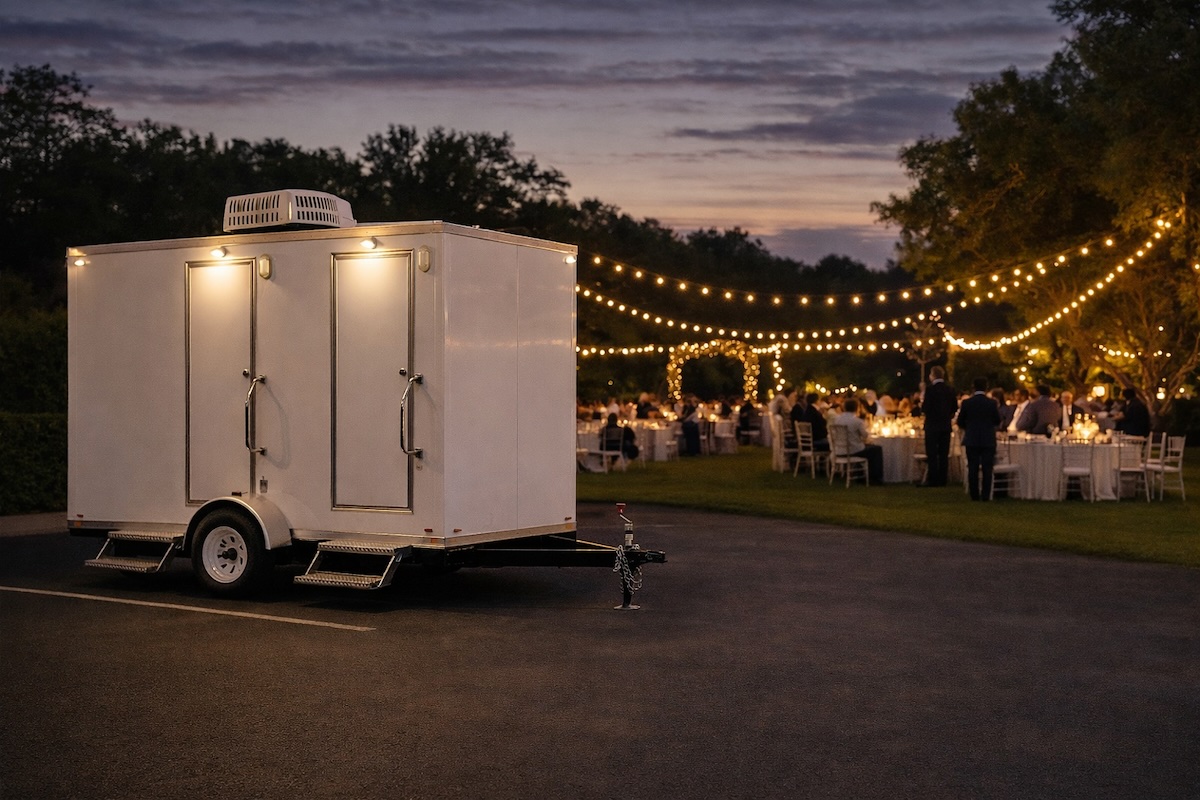
A comfort station gives guests two private suites with flushing toilets, a working sink, interior lighting and air conditioning. The holding tanks sit out of sight, and the unit runs on a standard 120-volt outlet.
How Many Porta Johns to Rent
For events, MCS plans on one standard unit per 50 guests for an event of up to four hours. Longer events need more: add roughly 15 to 20 percent for four to eight hours, and plan on close to double for anything past eight hours.
Meals, drinks and alcohol all raise usage. An evening reception with an open bar will call for more units than a two-hour afternoon party with the same guest list.
| Guests | Up to 4 hours | 4 to 8 hours | 8+ hours |
|---|---|---|---|
| 50 | 1 | 2 | 2+ |
| 100 | 2 | 3 | 4+ |
| 250 | 5 | 6 to 7 | 8+ |
| 500 | 10 | 12 to 14 | 16+ |
Planning figures for how many porta potties to rent run up to 1,000 guests, with the same adjustments for event length.
At large or spread-out sites, such as a festival with several stages or a park with fields at both ends, splitting the units into more than one group keeps the walk to a restroom short.
When several porta johns are grouped in one spot, the 2010 ADA Standards call for 5 percent of the units in each group to be accessible and marked with the International Symbol of Accessibility.2 A group of up to 20 units needs one ADA accessible portable restroom.
Porta Johns for Construction Sites
OSHA’s construction standard sets the minimum number of porta potties required on construction sites. A crew of 20 or fewer needs at least one toilet. Larger crews need one toilet seat and one urinal per 40 workers, and crews of 200 or more need one of each per 50 workers.1
The rule doesn’t apply to mobile crews that have transportation readily available to nearby toilets.
For service planning, MCS uses one unit per 10 workers on a weekly schedule as a starting point. A crew of 20 to 30, for example, might run two or three units serviced twice a week.
OSHA also requires washing facilities near the work area for crews applying paint, coatings, herbicides or insecticides, or working with other contaminants that could harm them.1 MCS hand wash stations meet OSHA standards where a job site requires them.
Rentals of porta johns for construction often run month to month, with weekly service as the starting schedule. Units and visits can be added as the crew grows.
Residential builds and remodels use the same planning. A single unit on weekly service covers a small crew of up to 10.
Porta Johns for Weddings and Events
For a single-day event, units are typically dropped off a day or two ahead and picked up after the event, often the next morning. That leaves time to adjust placement before guests arrive.
Good placement puts units on level ground, out of the busiest walkways but easy to reach. For an evening event, a spot near existing lighting helps guests find their way after dark.
For an outdoor wedding, the options are standard porta johns, a comfort station/portable restroom trailer or a mix of the two. A comfort station suits a formal reception that runs into the evening, and standard units can serve vendors, the setup crew or overflow. Guest counts for portable restrooms at a wedding use the same per-guest planning as other events.
Festivals, fairs and races need more layout planning. They tend to need several groups of units, at least one ADA unit in each group, hand wash stations near food vendors, and daily service when outdoor toilets for events stay in place over several days.
Porta Johns for Parks, Farms and Seasonal Sites
Some porta john rentals stay put for a season or longer. Parks, campgrounds, farms, and remote industrial and lumber sites often keep units on month-to-month or year-round rentals.
Units at these sites see use every day, so weekly service is the minimum. Remote locations can need more frequent visits.
At a ballfield or park pavilion, an ADA unit placed beside the standard units keeps the restroom area accessible for families with strollers, older visitors and wheelchair users. A hand wash station next to a concession stand or picnic area gives visitors a place to wash up before eating.
Choosing a Rental Length
A porta john rental can run for a single day or all year. Porta john rentals by the day, week, month or year each come with a different service plan.
A short rental is mostly delivery and pickup. As the rental gets longer, regular service visits keep the unit clean and keep the tank from filling.
Single day
Weddings, parties, fundraisers and other events under 24 hours. Units arrive beforehand and are typically picked up the next morning.
One week
Tournaments, fairs, festivals and remodeling projects. The unit stays on site all week, and mid-week pumping and sanitizing can be added.
Month to month
Construction, agricultural projects and seasonal businesses. Monthly rentals come with a set service schedule, often weekly.
Year-round
Parks, campgrounds, remote industrial sites and lumber operations. Service runs weekly or more often, depending on use.
Long-term rentals can include hand wash stations or a comfort station alongside standard units.
Delivery, Placement and Pickup
A few details at booking help delivery day go as planned. Having someone on site, or reachable by phone, during portable restroom delivery and setup helps if a unit needs to move a few feet.
Share the event or project details
Expected headcount, dates, the setting and how long the units need to stay.
Describe the site
Where the units should go, whether a truck can reach that spot, and any narrow roads, steep grades, gravel or soft grass along the way. Mention any permits or property restrictions too.
Delivery and setup
Units are typically dropped off a day or two before the start date. Each one goes on level ground and is checked to confirm it’s stocked. On windy or uneven sites, units can be anchored or weighted down.
Keep the service path open
On longer rentals, the service truck needs a clear route to each unit for pumping and restocking.
Pickup
Tanks are emptied, anchors come out, the units are loaded, and a final walk-through confirms everything has been removed and the area is clean.
Grass, gravel, dirt and pavement can all hold a porta john when the spot is level. On muddy ground, mats or a bed of gravel help keep a unit steady.
Service During a Longer Rental
Weekly porta potty service can be a possible baseline for a unit shared by up to 10 people. A unit shared by about 20 people may do well with service twice a week, while a unit serving 50 or more calls for daily service or a second unit.
A standard holding tank holds 60 to 70 gallons, or roughly 200 to 250 uses.
On a service visit, the technician may pump the tank, rinse and deodorize the interior, recharge the blue solution, clean the seat, walls and floor, restock toilet paper and urinal blocks, and inspect the unit for damage or leaks.
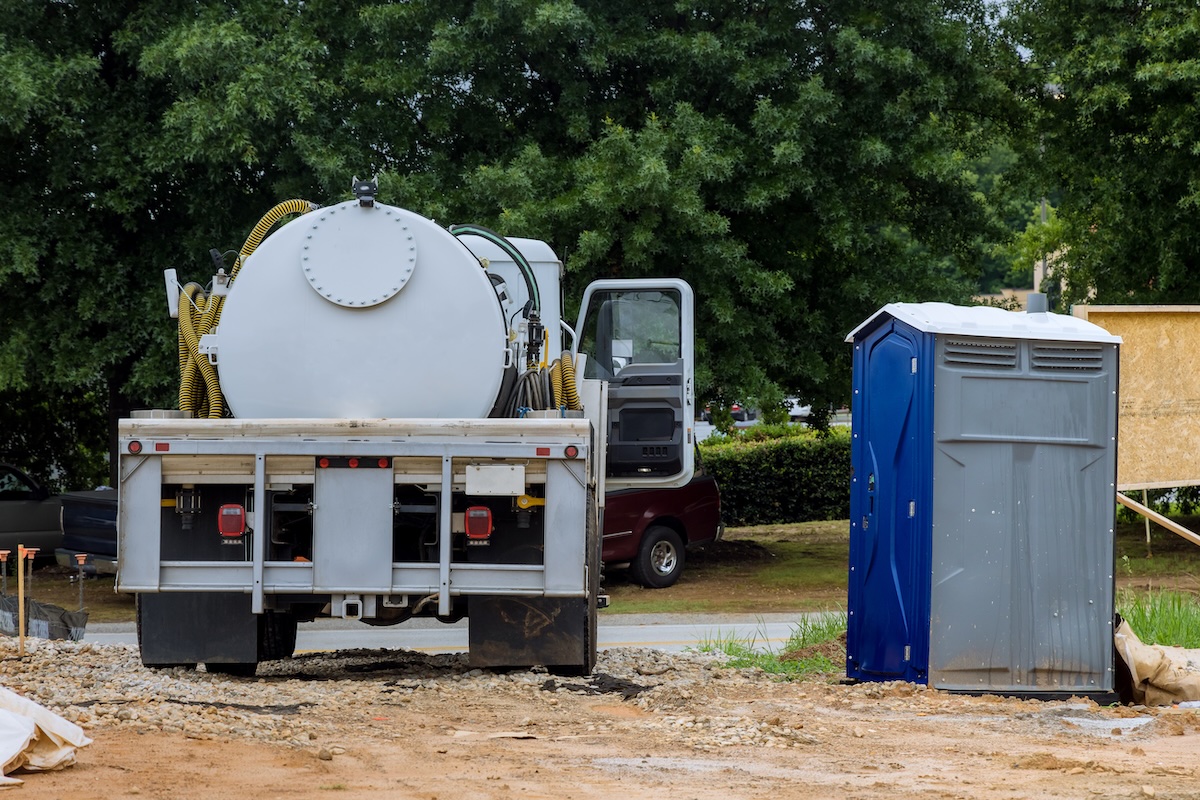
A few signs point to a unit that needs more frequent service: odor with the lid closed, toilet paper running out before the next visit, or a tank that fills ahead of schedule. Adding a visit or a second unit can take care of each of these.
Porta John Rental in Colorado Springs & Upstate South Carolina
MCS serves two regions with very different weather, and the climate changes how a rental is set up and serviced.
Colorado Springs winters bring long stretches below freezing, and a porta john’s holding tank can freeze when the cold holds. A freeze treatment added to the tank lowers its freezing point, though an extended cold snap can still turn a tank to slush. That’s why winter porta potty rentals in Colorado Springs can move to more frequent service during long cold spells.
Placement helps in winter too. A spot with southern exposure and afternoon sun, a building or fence on the windward side, and a cleared, sanded path to the door all keep a unit usable. In summer, full sun can call for more frequent cleaning.
Upstate South Carolina’s milder weather is easier on units, and weekly service may be enough even with heavy foot traffic. In the Upstate, MCS serves Greenville, SC, Anderson, SC and Seneca, SC, along with portable restroom rentals in Clemson.
In Colorado, the MCS team handles portable toilet rental in Colorado Springs and across El Paso County.
What Affects the Cost of a Porta John Rental
MCS quotes every porta john rental individually, based on the dates, the site and the setup involved. Porta potty rental cost in Colorado Springs and the Upstate depends on the same set of details:
- Unit type: standard, ADA, hand wash station or comfort station
- Number of units
- Rental length
- Service frequency
- Site location, placement and access
- Dates and season
- Add-ons, such as hand wash stations
Delivery and pickup are part of every rental, and each add-on appears as its own line on the quote.
Porta John Rental FAQ
Q: Is a “porta john” the same thing as a porta potty?
A: Yes. Porta john, porta potty, port-a-potty and portable restroom all describe the same self-contained sanitation unit. (And they’re a few of the many names people use for portable restrooms!)
Q: How far ahead should I book a porta john rental?
A: As soon as the dates are set. High demand during peak event and construction seasons can limit availability, and booking early gives the widest choice of units, including ADA units and comfort stations.
Q: Does an event in a public park need a permit for porta johns?
A: It can. Events on public property such as parks or streets may need a permit from the city or county, and the parks department or permitting office for that location can confirm what applies.
Q: Can I add a hand wash station to a porta john rental?
A: Yes, and it shows up as its own line on the quote.
Q: Can I rent a porta john for a home remodel?
A: Yes. Week-long and monthly rentals both work for remodeling projects. One unit on weekly service covers a small crew, and an ADA unit gives extra room if family members will use it too.
Q: How does a porta john stay clean between visits?
A: The blue solution in the tank sanitizes waste and controls odor. Each service visit pumps the tank, recharges the solution and cleans the interior.
Planning a portable restroom rental starts with a few details: the headcount, the dates, and a description of the site. With those in hand, it’s possible for porta john rental companies to recommend units and a service schedule to match.
Call MCS Portable Restrooms at 719-391-0176 in Colorado Springs or 864-614-5202 in Upstate South Carolina, or request a rental online.
References
1. Occupational Safety and Health Administration. 29 CFR 1926.51, Sanitation. U.S. Department of Labor. Source
2. U.S. Access Board. 2010 ADA Standards for Accessible Design, Section 213.2. U.S. Access Board. Source